

Stainless steel is a practical starting point for a lower-care, accessible jewelry range; 925 sterling silver suits a range where the precious-metal base is part of the purchase. For resale, compare equivalent designs, the complete finish specification and the cost of supporting each sale. Neither material alone guarantees better margins, water resistance or suitability for sensitive skin.
Table of Contents
- Compare Stainless Steel and Sterling Silver for Your Store
- How Composition Shapes Value and Retail Positioning
- Care Burden, Cost Structure and Margin Planning
- Frequently Asked Questions
Compare Stainless Steel and Sterling Silver for Your Store
Start with the role you want the piece to fill, then check whether the quoted product can support it. A silver pendant can be worn daily, and a well-presented steel design can be a gift; these are merchandising choices, not rules imposed by the metal.
Stainless Steel and 925 Sterling Silver at a Glance
| Criterion | Stainless Steel (304 / 316L) | 925 Sterling Silver |
|---|---|---|
| Metal Identity | Industrial alloy; confirm 304 or 316L | Silver alloy with 92.5% silver |
| Common Jewelry Grades or Fineness | Grade confirmation matters more than purity language | 925 fineness is the key buying marker |
| Typical Wear Positioning | Everyday chains, bands, and stacks | Giftable pendants and classic earrings |
| Maintenance Expectation | Lower day-to-day care; finish still matters | Tarnish management; cleaning must suit the finish |
| Usual Finishing Route | Natural steel or confirmed PVD coating | Polished, oxidized, or plated |
| Retail Tier Normally Served | Accessible fashion tier | Precious-metal tier |
These are buying signals, not promises attached to every SKU. The linked retail comparison discusses material, care, and styling differences, but its broad claims about corrosion and skin sensitivity should not replace a finished-item specification or test report. Confirm grade, construction, coating and supplier specifications before ordering.
For a boutique, online seller or distributor, the useful comparison is between two products that could meet the same customer need. Hold dimensions, chain scope, stone setting and packaging reasonably consistent before attributing a price difference to the base metal.
Match Material Choices to Buying Criteria
For a hypothetical heart-pendant trial, offer steel as an accessible option and sterling silver as a precious-metal option. The motif can stay consistent, while the material disclosure, finish specification and care card need to be different.
Judge both options against these buying criteria:
- Composition tells the buyer what they are actually purchasing.
- Wear performance guides suitable uses and product descriptions.
- Finish technology shapes color expectations and supplier questions.
- Care burden affects inserts, aftercare advice, and support tickets.
- Cost structure links supplier quotes to your selling expenses.
- Assortment fit decides where each style belongs in the range.
When you are ready to compare like-for-like pieces, browse HonHo Jewelry Wholesale and shortlist similar silhouettes before splitting your opening budget.
How Composition Shapes Value and Retail Positioning
925 sterling silver means at least 925 parts silver per 1,000, or 92.5% silver; the remaining alloying metal is often copper. The FTC’s explanation of silver jewelry distinguishes sterling from silver-plated products. Stainless steel is a separate alloy family: confirm the quoted grade, such as 304 or 316L, for each style. KenKen Gems also discusses sterling silver composition and value.
Silver’s precious-metal identity can support gift messaging, provided the material disclosure is documented. Confirm specifications and any hallmark requirements in the selling market.
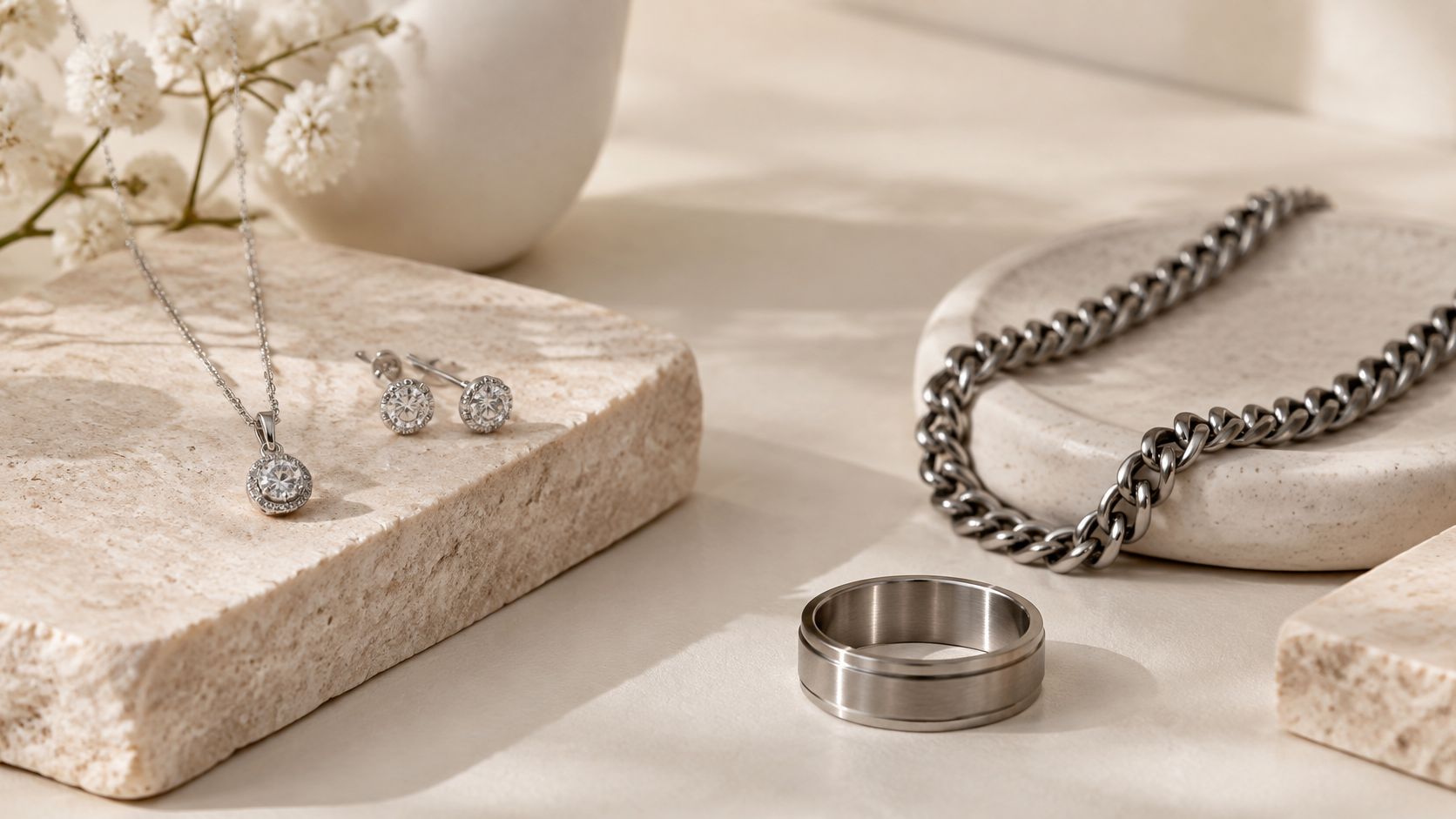
- Silver-led displays can explain the precious-metal base of delicate earrings, symbolic pendants and rings. Match any purity statement to the supplier’s documentation.
- Steel-led displays can group stackable bands, chains and bracelets by styling options. Give the finish and care limits the same attention as the design.
If you're pricing rings, HonHo's guide to S925 ring prices gives you a solid frame for comparing suppliers.
Build Connected Price Tiers
One design language across both metals lets shoppers compare without the store feeling like two unrelated businesses. Keep the motifs, photography, and packaging direction consistent, and just be clear about which base metal each piece uses.
- Compare conversion and contribution at each price tier. Different materials, finishes or promotions make this a product trial, not an isolated measurement of price elasticity.
- Track gifting demand through gift-packaging selections and purchase notes.
- Measure repeat purchases separately to see whether customers return for more styles or move between tiers.
HonHo supplies stainless steel, brass and 925 sterling silver across several jewelry categories, with 304/316L options in its material and development guidance. Confirm the base metal of each shortlisted SKU and whether matching designs are available; a factory’s material range does not establish the grade of every item.
Browse HonHo Jewelry Wholesale's 925 Silver Jewelry and Stainless Steel Jewelry assortments to shortlist related silhouettes, verify the material disclosures, and put together a focused wholesale test order for your store.
A 2015 stainless-steel study by Yuan and colleagues reported weekly nickel release of 0.02 µg/cm² for 316L and 0.08 µg/cm² for 304, compared with 2.06 for 303 and 1.51 for 201. Its abstract describes solution-treated, mirror-polished specimens tested in artificial sweat and comparison with EN 1811:2011. These are results for those specimens under those conditions, not measurements of HonHo jewelry.
The abstract was available for review, not the full experimental report. A grade label or this historical comparison cannot establish current-market compliance, an allergy-free outcome or the behavior of a coated finished assembly. Request an applicable report identifying the actual product, contact components, method, conditions and acceptance criteria.
Silver tarnish and cleaning limits
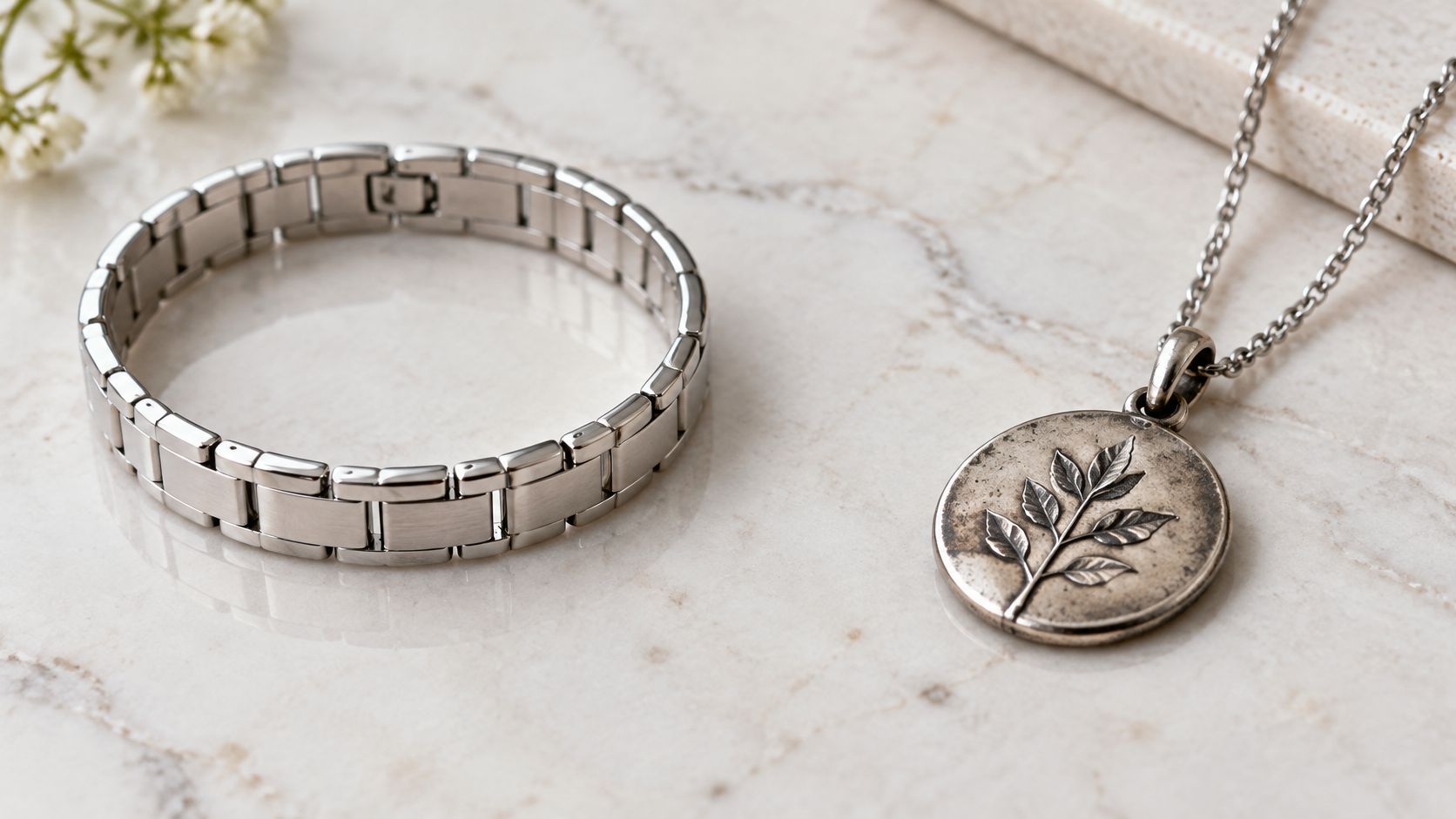
Silver tarnish is a corrosion product, commonly silver sulfide formed through exposure to sulfur-containing gases. It is not only a reaction of copper in the alloy. The Canadian Conservation Institute’s silver-care guidance explains that removing tarnish also removes some underlying silver. Repeated polishing therefore has a cost, especially on a thin plated surface.
For an unplated polished silver item, explain that tarnish may develop and that cleaning must suit its finish. Do not extend polishing advice to gold plating, deliberately oxidized details, stones or adhesives without checking the supplier’s care instructions. A darkened surface alone does not show whether a piece can be cleaned for resale or whether it has another defect.
Turning Wear Behavior Into Business Decisions
Plan aftercare around the finished product, then measure the actual service cost:
- Record complaints by SKU and symptom: tarnish, worn color, broken clasp and skin discomfort need different investigations. Do not assume a return rate from the base metal.
- Include storage and cleaning guidance for silver, with separate instructions for plated or oxidized finishes.
- Offer a polishing cloth only when it is compatible with the finish; include its cost before counting an accessory sale as profit.
- Check that listing claims match the documented use conditions. Customer photos and a description of cleaning and exposure help investigate a complaint, but do not establish its cause by themselves.
For ear-contact styles especially, verify the alloy before you commit to a wholesale run. It helps to understand what 316L stainless steel jewelry means before you finalize the selection.
Where Each Material Belongs in Rotation
Steel can suit an everyday assortment, but “everyday” should not silently mean suitable for workouts, showers or swimming. Stainless steel relies on a protective chromium-rich surface film; corrosion can occur under adverse conditions, including chloride exposure. Worldstainless explains the corrosion limits. Coatings, clasps, soldered joints and stone settings also need product-specific care limits.
Silver can support gift and occasion displays when the customer values its precious-metal base, and it can also suit everyday use with appropriate care. Show the actual finish and packaging, and explain upkeep before purchase instead of assuming gift buyers expect it.
Gold-tone describes color, not the metal underneath. A gold-colored chain could have a stainless-steel, brass or 925 silver base. Judge the base metal and surface finish separately, and reserve “gold plated” for a finish the supplier has confirmed.
Physical vapor deposition (PVD) describes a deposition process. The term alone does not identify every layer, establish real gold content or specify coating thickness. Ask which coating is being quoted on the selected base metal and what the finished item is intended to withstand.
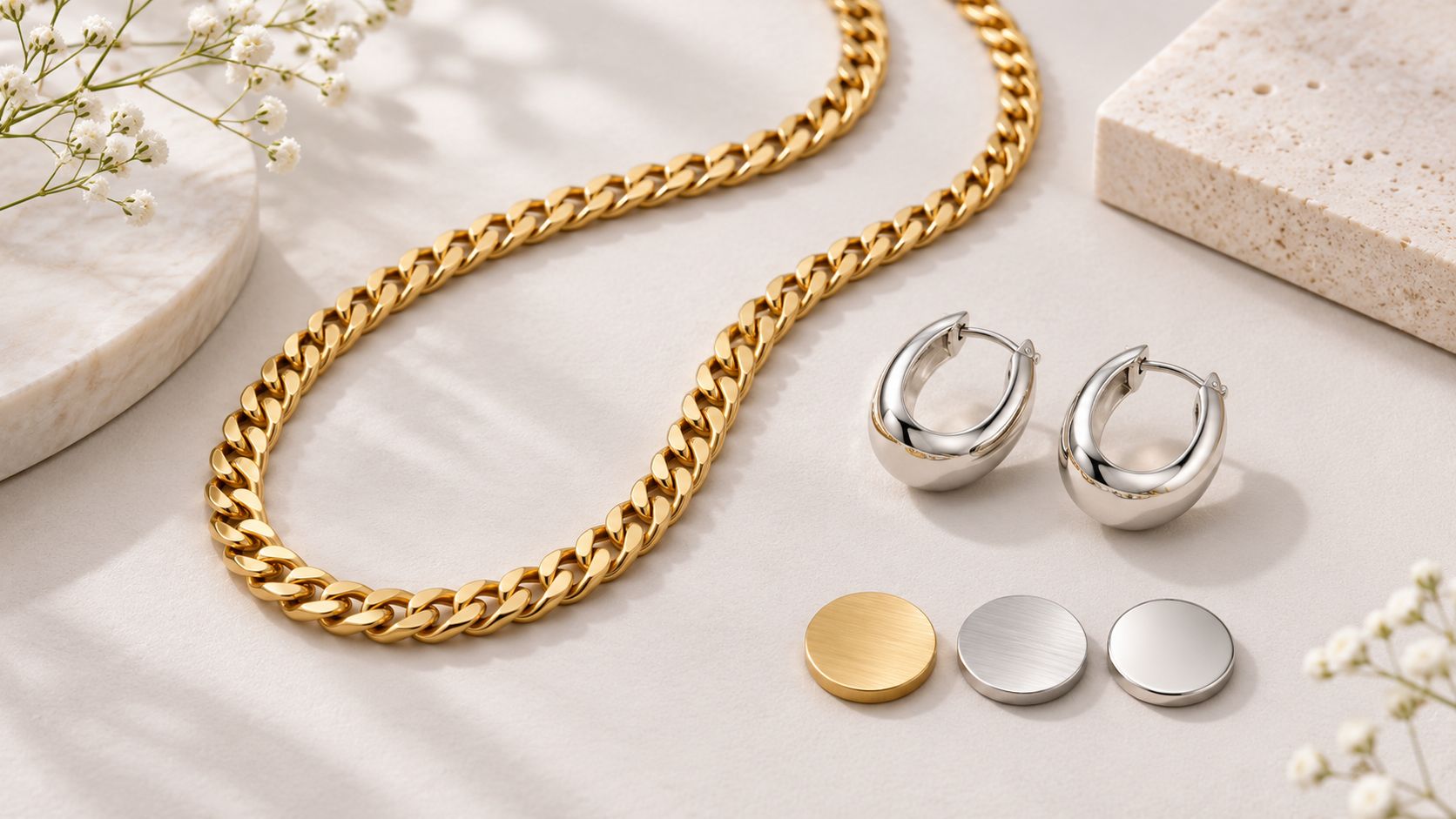
Do not infer zero nickel release from the word PVD or assume that every electroplated product releases more nickel. Without evidence for the actual layer system and finished item, neither claim is a sound basis for a purchase order.
For either route, request the substrate grade, surface preparation, layer specification and inspection scope. If skin contact is central to the product, the evidence should identify the assembled item or the specific contact parts tested. A test on an uncoated coupon cannot stand in for a report on plated earrings, posts and backs.
Match Finish Specifications to Actual Wear
Ask for evidence tied to the finished item, its skin contact and the selling market. Material certificates, coating measurements and finished-product tests answer different questions.
Colored coatings on steel can wear; friction, layer specification and use conditions affect the result. HonHo’s guide to gold PVD coating explains questions to raise with the supplier.
- Stackable rings deserve a close look at the rubbing between adjacent bands, not just how they photograph.
- Pendant necklaces warrant checks around contact points like moving bails and the chain links they rest against.
Sterling silver can be polished, plated or deliberately oxidized. This sterling silver finishing and care comparison provides retail context; use the silver-care source above for the tarnish mechanism and cleaning limits.
A deliberately oxidized pendant needs different care from a gold plated silver pendant. Polishing away an intended dark detail or abrading a plated surface can alter the design. Ask the supplier to approve the care-card wording for the exact finish.
Set Private-Label Expectations Before Ordering
HonHo’s plating guidance describes in-house PVD for stainless-steel development and electroplating options for brass and 925 silver. These are custom-development routes, not the specification of every ready-stock SKU. Confirm the selected item’s finish, component compatibility and quotation in writing.
- Get the base metal and finish method confirmed in writing.
- Test samples against the friction and wear your customers will actually put them through.
- Line up target price, care instructions, and customer expectations before approving production.
Browse HonHo Jewelry Wholesale for ready-to-buy styles, or use the custom jewelry enquiry when the project needs a specific design, finish or branded packaging. Confirm which requirements are included in the quotation.
Care Burden, Cost Structure and Margin Planning
Silver's upkeep creates both a service obligation and a possible accessory sale. Give customers accurate storage guidance, then offer a compatible polishing cloth where the finish allows it. HonHo's sterling silver tarnish prevention guide can help you prepare practical care cards.
Steel’s lower maintenance requirements can be relevant to an assortment decision, but do not infer fewer support messages or better margins from that retail comparison. Track care questions, defects and returns in your own sales records.
Cost and Operations Factors by Material
Include preparation and post-sale work when comparing quotations:
| Cost or Operations Factor | Stainless Steel | 925 Sterling Silver | Buyer Action |
|---|---|---|---|
| Care collateral | Basic storage and cleaning guidance | More detailed tarnish-prevention guidance | Include the cost of inserts, pouches and care cards |
| Post-sale contact | Usually a lighter care burden | More potential questions about tarnish and polishing | Track support time by material rather than assuming a difference |
| Restock behavior | Proven basics may support repeat purchasing | Evergreen and gift-ready styles may justify replenishment | Set reorder points from actual sell-through and lead times |
| Suitable inventory depth | Deeper for tested chains, bands and everyday styles | Moderate to deep where gifting demand is proven | Keep untested designs shallow in either material |
| Markdown exposure | Demand-dependent, particularly for trend-led styles | Demand-dependent, with care costs adding to slow-stock risk | Review aging inventory early and limit seasonal motifs |
Treat these factors as planning prompts rather than measured return rates or guaranteed cost differences. Your own order history will show which material creates more work after checkout.
Calculate Contribution Before Setting Markup
Use your supplier quotes and channel fees rather than a universal jewelry markup. Markup divides the selling-price increase by cost; gross margin divides gross profit by revenue. Neither calculation captures all selling expenses.
- Add the unit cost, allocated freight, duties, packaging and preparation labor.
- Subtract that total, along with selling fees and expected return costs, from your proposed retail price.
- Check whether the remaining contribution covers overhead and your profit target.
For a hypothetical pendant comparison, enter the actual values for each option. Use the same currency and accounting basis, exclude sales tax collected for remittance, and avoid counting freight or return costs twice.
| Per-unit worksheet | Steel option | 925 silver option |
|---|---|---|
| SKU, finish and quoted quantity | _____ | _____ |
| Net selling price after discounts (A) | _____ | _____ |
| Unit cost + allocated freight/duties (B) | _____ | _____ |
| Packaging, care insert and preparation (C) | _____ | _____ |
| Selling fees + expected return/service cost (D) | _____ | _____ |
| Contribution before overhead: A − B − C − D | _____ | _____ |
Use a documented estimate for D until you have order history, then replace it with observed costs. Compare identical photography standards and include an optional silver-care accessory separately; do not assume shoppers will pay a fixed silver premium.
Match Inventory Depth to Replenishment
Buy deeper into proven evergreen chains and bands when repeat demand and contribution support it. That applies to either material. Keep untested or seasonal motifs shallow and reserve cash for replenishment.
- Restock planning: Faster replenishment can reduce safety stock, but dispatch is not delivery.
- Launch planning: Samples follow a different calendar from ready-stock orders.
HonHo Jewelry Wholesale lists a US$100 merchandise minimum after discounts. Ready-stock orders usually dispatch within three business days after payment, subject to quantity and destination; dispatch is not delivery. Custom samples normally take 25–35 days for stainless steel and 25–30 days for brass/925 silver. Custom MOQ is 50 pieces per style and color, with bulk production normally 35–45 days after sample approval and final confirmation. Confirm the project schedule before committing to a launch.
Check the current wholesale order and enquiry details and sample approval guidance when planning ready stock and custom production on separate calendars.
Match Materials to Selling Scenarios
Use these scenarios to frame a small trial, then let your own results determine depth:
- A boutique testing a gift display can compare sterling pendants with accessible steel alternatives. Use separate material disclosures even when the packaging shares one design.
- A seller building a stacking range can compare steel and silver bands at equivalent dimensions. Check rubbing between adjacent rings and measure sell-through before buying deeper.
- A marketplace reseller should separate cosmetic changes, component failures and care questions in the returns log. Neither material alone predicts return exposure.
- A distributor serving humid-climate accounts should request relevant finished-item exposure evidence and written care limits. Do not translate a steel grade into a blanket sweat or water guarantee.
- A private-label startup can compare both materials for its target design. Brass may be a separate development option, but needs its own quote and finish review; keep the number of styles and colors within the available budget and MOQ.
Complete a Pre-Order Checklist
Use one approval record for each finished sample, including posts, backs, clasps and other contact components. Agree measurable acceptance criteria with the supplier before approving production.
| Approval field | Record for each shortlisted sample |
|---|---|
| Identity and composition | SKU/reference: _____; supplier: _____; steel grade or silver fineness evidence: _____; component exceptions: _____ |
| Finish | Base metal: _____; coating method/layers: _____; color reference: _____; agreed specification and evidence: _____ |
| Dimensions and function | Size/weight: _____; ring or chain fit: _____; clasp/post/back operation and sharp edges: _____; agreed tolerance: _____ |
| Use and testing | Target market/contact area: _____; test method, sample ID and report date: _____; wear/exposure conditions: _____; acceptance criteria and result: _____ |
| Care and presentation | Approved cleaning/storage wording: _____; finish restrictions: _____; packaging and listing material disclosure: _____ |
| Commercial scope | Quantity per style/color: _____; unit quote and inclusions: _____; sample/production/dispatch dates: _____; reorder availability: _____ |
| Release decision | Approve / revise / reject: _____; changes required: _____; reference sample/photos retained: _____; approver/date: _____ |
A material certificate does not establish coating durability; a coating measurement does not establish nickel-release compliance. Keep each report tied to the sample and the question it answers. A brief wear trial can reveal fit or finish problems, but cannot replace applicable laboratory testing or predict years of use.
Compare a controlled trial before buying depth
Run one motif across both materials for a defined launch window with comparable photography, promotion and availability. Record the finish and dimensions as well as the metal, so a construction difference does not disappear from the comparison.
Compare units sold, contribution after selling costs, returns and care questions over the same period. Separate gift-packaging uptake and repeat purchases where you can. A small or heavily promoted launch is a reason to collect more evidence before a large reorder.
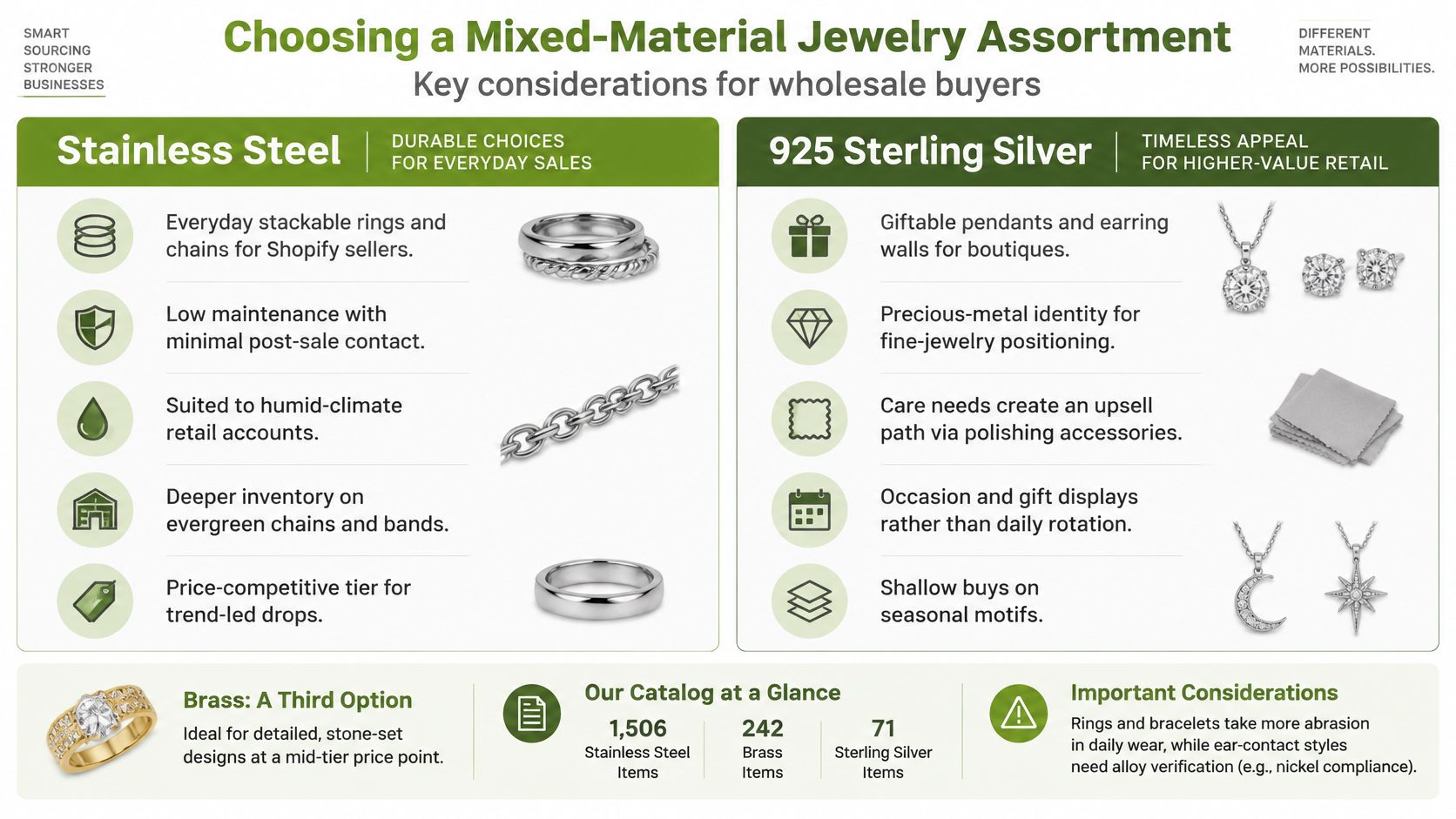
The assortment illustration gives possible merchandising roles. Its catalog counts are not verified current inventory. Treat the suggested service levels, humid-climate suitability and stock depth as planning assumptions to test, not measured outcomes. Silver is not limited to occasion wear; either material can justify deeper stock when demand supports it.
For more on assortment planning, read our guide to wholesale jewelry for boutiques.
Frequently Asked Questions
Does Stainless Steel Tarnish Like Sterling Silver?
Stainless steel does not develop silver-sulfide tarnish in the same way as silver. It can still corrode under adverse conditions, while residue, abrasion or a worn coating can also change its appearance. Diagnose the finished piece before choosing a cleaning method.
Material and maintenance differences help frame a care enquiry. Ask where the discoloration appears and how the customer cleaned the piece before recommending a fix, especially for a plated finish.
Can Both Materials Share a Gold-Tone Collection?
Yes, if each listing states the confirmed base metal and finish. Color can organize a collection, but cannot replace material disclosure where shoppers compare products.
Name your listings the same way the supplier confirmed the specs:
- “Gold-tone stainless steel hoop earrings” describes the color and base; disclose the coating method once confirmed.
- “Gold plated 925 sterling silver hoop earrings” is appropriate only for a confirmed gold-plated silver product, with care instructions for that surface.
Is 316L Always Better Than 304?
No. The grade alone does not establish construction quality, coating performance or suitability for a wearer. When comparing 316L stainless steel jewelry, assess the finished product and its evidence rather than treating the grade as a guarantee.
Before ordering, get your supplier to confirm:
- The alloy grade for each SKU you're considering.
- The finish method and whatever documentation they can provide.
- Care guidance and any restrictions tied to how the piece will be used.
Neither grade on its own justifies an allergy-free claim.
How Should New Resellers Split Their Opening Budget?
There is no universal ratio. Buy enough comparable designs to test both tiers and hold cash for replenishment. Match the trial size to the MOQ and the amount you can afford to keep in slow-moving stock.
Push more into one tier only when the evidence backs it: repeat sales, contribution after fees, manageable returns, and solid customer feedback. Compare results across similar selling periods too, so a single promotion doesn't end up driving your next order.
Browse HonHo Wholesale Jewelry to shortlist comparable styles. For a material-and-finish quotation, send the selected designs or reference images, target dimensions, base-metal options, desired finish, quantity per style/color, selling market and intended wear. Ask for sample availability, care limits and the evidence needed for approval before setting the purchase order.


