

A horseshoe nail cross necklace should be bought as a complete system, not as a pendant photo. For wholesale approval, confirm the pendant construction, base metal, finish, bail or jump-ring opening, chain or cord, clasp, weight, and label wording on the same specification sheet. That is the difference between a sample that merely looks right and a reorder that can be checked.
This guide focuses on the complete necklace: how the pendant hangs, how the chain or cord fits, what each material claim means, and what to record before payment. The horseshoe-nail name identifies the motif. It does not, by itself, prove that the piece uses a reclaimed farrier nail, 316L stainless steel, sterling silver, or any particular coating.
Table of Contents
- What a Horseshoe Nail Cross Necklace Is and Where It Comes From
- Materials Compared Across Stainless Steel, Brass and 925 Silver
- Design Details That Affect Comfort and Quality
- Finish Choices and the Labels That Must Match
- What the Symbol Means to Different Buyers
- Sourcing Routes, Minimums and Pricing Math
- Confirm the Specs and Place Your First Order
What a Horseshoe Nail Cross Necklace Is and Where It Comes From
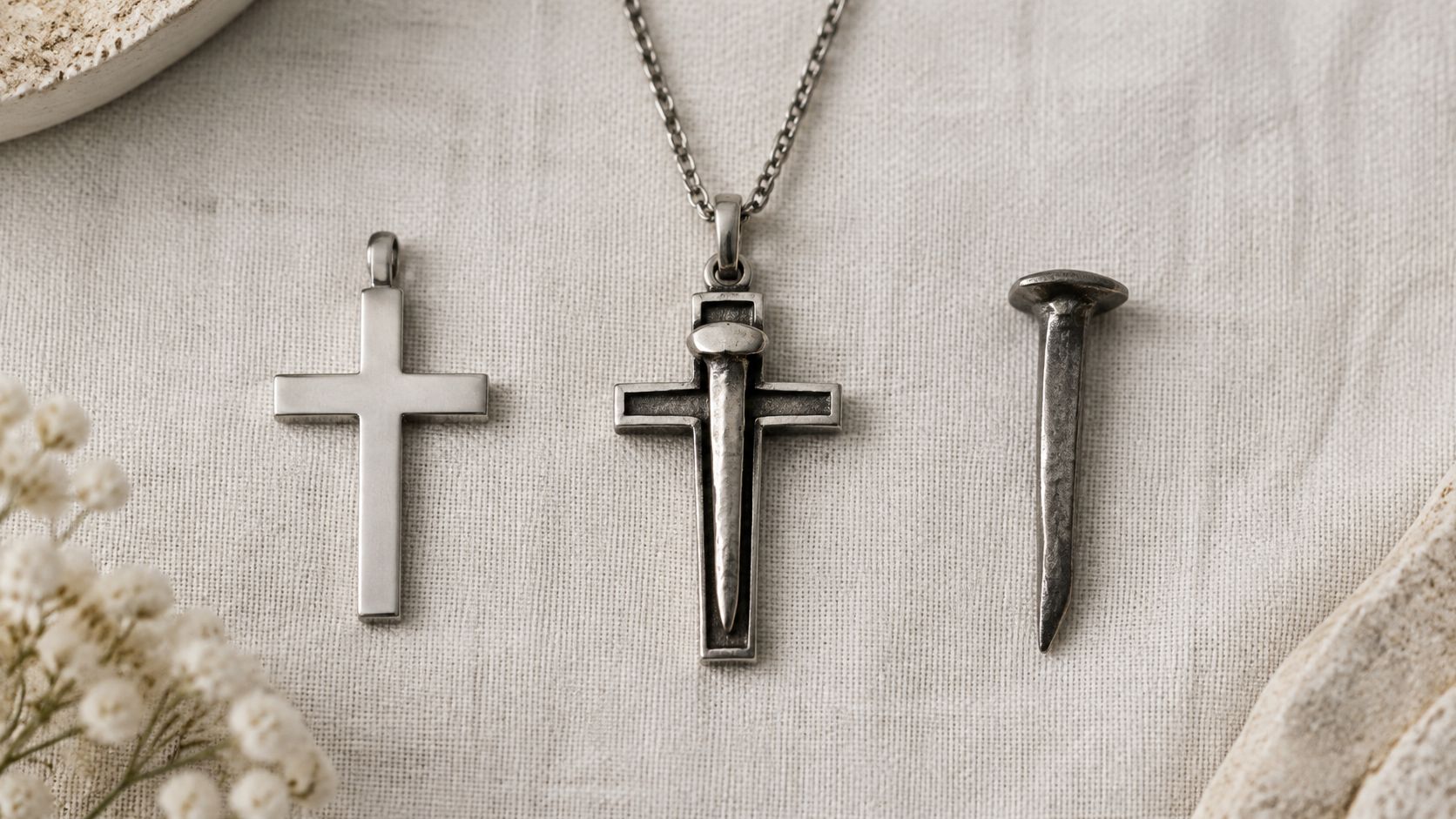
The design combines a familiar cross outline with nail-shaped elements. Some pieces are cast or formed to resemble horseshoe nails; others may use actual nails. Treat those as different constructions. The name alone does not tell you which one is in the sample.
The Cross Came First
Cross necklaces carry an established Christian reference, even when a retailer presents the piece as fashion jewelry. Product copy can describe the visible form and the intended collection without claiming a belief, protective effect, or personal meaning for every wearer.
The Nail Brings a Different History
The nail form adds a farriery and metalwork association. The Victoria and Albert Museum's pendant cross record is useful as a historical example of a metal pendant cross, but it does not document horseshoe-nail construction. Keep those two ideas separate in supplier notes and retail storytelling.
On a finished necklace, the recognizable details are usually the tapered nail form and formed head. They are visual cues, not proof of a reclaimed material claim.
What You're Stocking
Ask the supplier to name the construction in writing: newly manufactured nail-inspired component, actual nail, reclaimed nail, or another method. If an actual steel nail is used, request the alloy or grade if known, the rust-control process, the final coating, and care limits. If the piece is cast or formed as jewelry, record that instead of borrowing an “authentic nail” story from another seller.
| Component | Record before approval | Why it matters |
|---|---|---|
| Pendant body | Construction, base metal, dimensions, weight | Controls the material claim, balance, and reorder check |
| Join or wrap | Assembly method and visible finish | Weak or unfinished joins can crack, snag, or discolor |
| Bail or jump ring | Internal opening and closure method | Determines whether the pendant moves freely and stays secure |
| Chain or cord | Material, length, gauge or diameter, extension | A complete necklace must be approved as a pairing |
| Clasp and end fittings | Type, size, base metal, finish | Small fittings often fail or mismatch before the pendant does |
| Finish and packaging | Process, color reference, care copy, label text | Keeps the sample, tag, listing, and reorder aligned |
The listing wording carries real weight: 925, vermeil, gold plated, and silver-tone describe different constructions. Do not infer one from color alone.
Materials Compared Across Stainless Steel, Brass and 925 Silver
The same silhouette can be made in several base metals. Compare verified construction and sample performance; do not assume that every horseshoe nail cross necklace is available in all three materials.
| Material route | What must be verified | Typical buying consideration | Label limit |
|---|---|---|---|
| Stainless steel | Grade, pendant and chain material, surface process | Useful where corrosion resistance and straightforward care matter | Say 316L only with written grade confirmation |
| Brass | Brass base, plating or coating, care limits | Flexible for fashion finishes; exposed brass can tarnish | Do not describe a plated brass piece as vermeil |
| 925 sterling silver | Silver fineness, markings, chain and findings, any gold layer | Precious-metal positioning with normal tarnish care | 925 and sterling claims require verified composition |
Stainless Steel for Low-Maintenance Counters
Stainless steel is often chosen for jewelry that needs practical corrosion resistance, but grade and finish still matter. Use 316L stainless steel only when the supplier confirms it for the specific pendant, chain, and relevant fittings. If the paperwork says only stainless steel, keep the listing at that level.
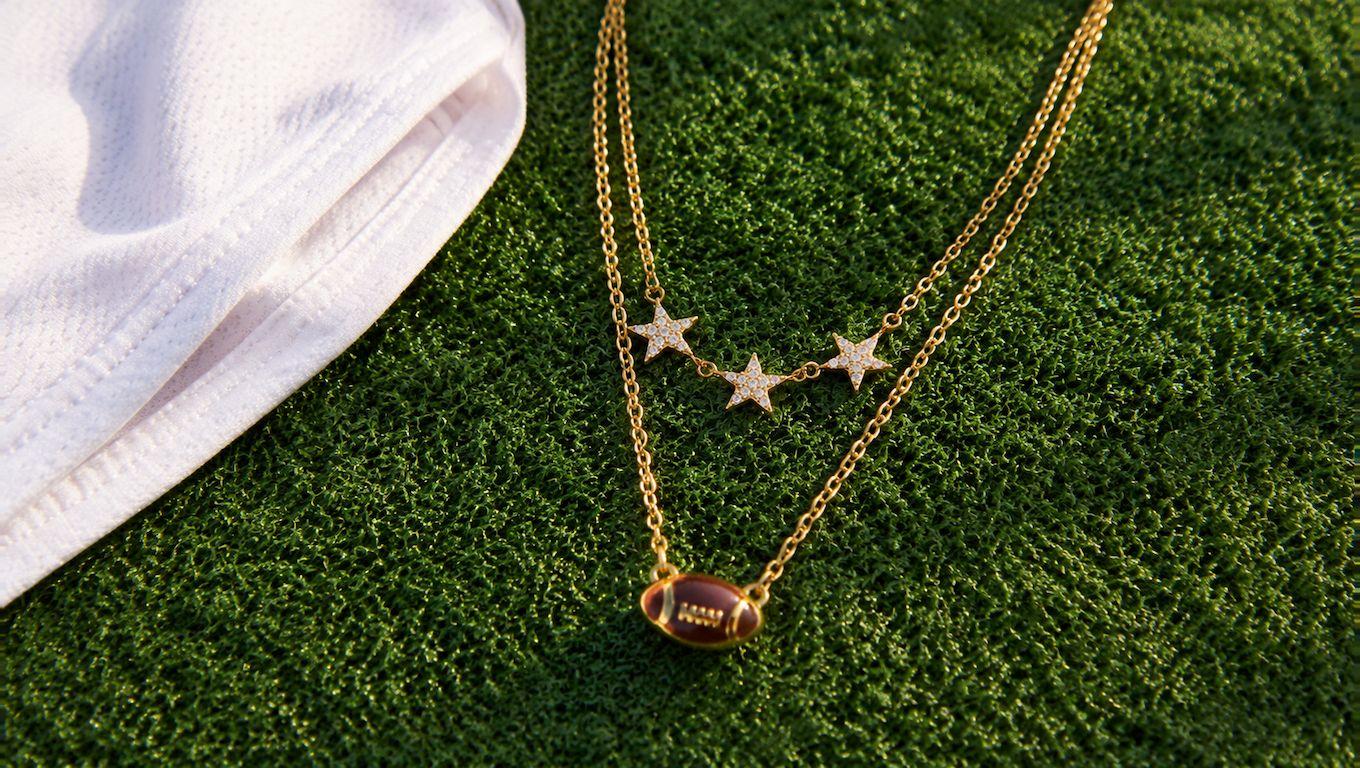
If you are comparing grades before you commit, what 316L stainless steel jewelry means for wholesale buyers explains why written confirmation matters. The Gold Plated Stainless Steel Football and Star Double-Chain Necklace also shows the correct naming pattern: finish first, verified base metal second. It is a naming example, not evidence that this horseshoe nail design uses the same specification.
Brass for Gold-Tone Fashion Assortments
Brass is a copper-zinc alloy commonly used under decorative finishes. Approve the color and workmanship on the physical sample, then record the coating method, care instructions, and any test result the supplier provides. A test method and result describe that sample or batch; they do not translate directly into a guaranteed number of wearing years.
925 Sterling Silver for Premium Displays
Sterling silver contains 92.5% silver. the FTC guidance on buying platinum, gold, and silver jewelry explains the meaning of 925. Confirm whether the pendant, chain, clasp, and jump rings are all sterling or whether any component uses another metal, and write the product description accordingly.
Decision rule: choose the material route that fits your price position and care expectations, then verify the exact component specification. The motif does not determine the metal.
Plating thickness, adhesion, color, and wear vary with the process and the underlying part. Request the specification and the applicable test method for the item you are buying. A factory's general capability is not a promise that every ready-stock SKU uses the same coating.
Design Details That Affect Comfort and Quality
For a complete necklace, chain and connection details are as important as the pendant face. A pendant can pass a photo review and still hang sideways, bind at the bail, feel top-heavy, or expose an unfinished edge.
| Check | How to inspect the sample | What to save for reorders |
|---|---|---|
| Pendant dimensions and weight | Measure the physical sample and note whether it sits flat | Height, width, thickness, and weight with tolerance |
| Edges and nail heads | Inspect under light and handle against fabric; note burrs or snag points | Approved photos and defect limits |
| Bail or jump ring | Check free movement, closure gap, and orientation | Internal opening, wire size, and assembly method |
| Chain or cord | Confirm it passes the connector, hangs freely, and balances the pendant | Material, length, gauge or diameter, extension, and color |
| Clasp and end fittings | Open and close normally; inspect soldering and finish match | Clasp type, fitting dimensions, and component material |
| Coating appearance | Compare the sample to the agreed color reference under consistent light | Process, color reference, and supplier test report if ordered |
How Each Check Shows Up in Store
- Pendant weight: match the chain or cord to the pendant rather than treating either component in isolation.
- Edge finish: define acceptable workmanship with an approved sample and photos instead of inventing a universal edge-radius number.
- Bail internal diameter: record the actual opening. A connector that fits a flexible cord may not accept a thicker chain or clasp end.
- Chain gauge and length: check pairing options against the wholesale stainless steel chains guide, then confirm the specification for this item.
- Coating durability: request the test method, conditions, acceptance rule, and result. “Tested” without those details is not a useful purchasing record.
- Nail-head legibility: approve the motif at normal viewing distance, but do not let styling replace material verification.
The Junction and a Simple Sample Test
Inspect the cross intersection, wrap, soldered areas, bail, and jump-ring closure. Use normal handling to check movement and alignment. Do not repeatedly bend a finished component by hand unless the supplier and buyer have agreed on a defined destructive or cycle test; an improvised flex test can damage a sound sample and produces no comparable result.
If durability is a key requirement, state the test method, number of cycles or exposure conditions, and pass/fail criteria before testing. Keep photos and results with the approved specification so a later batch can be compared against the same evidence.
Finish Choices and the Labels That Must Match
Color is not construction. A gold-colored surface may be applied over brass, stainless steel, sterling silver, or another verified base. The product name, hang tag, invoice, and marketplace fields should use the same base-metal and finish wording.
| Verified construction | Appropriate wording | Do not infer |
|---|---|---|
| Gold coating over brass | Gold plated brass, or another verified process description | Vermeil or solid gold |
| Gold coating over stainless steel | Gold plated stainless steel or verified PVD wording | 316L, PVD, or vermeil without documentation |
| Qualifying gold layer over sterling silver | Vermeil when every FTC condition is met | That every gold-over-silver item qualifies |
| Silver-colored stainless steel | Silver-tone stainless steel | Silver plated or sterling silver |
| Verified 925 sterling silver | 925 sterling silver | That the chain and all findings share the same composition |
What Vermeil Requires
Under the U.S. FTC Jewelry Guides, vermeil requires a sterling-silver base, gold or a gold alloy of at least 10-karat fineness on all significant surfaces, and a minimum thickness equivalent to 2.5 micrometers of fine gold. The source and scope are set out in the FTC Jewelry Guides statement of basis and purpose.
Before using the term, obtain documentation for the silver base, gold fineness, coverage, and thickness. A brass or stainless steel piece with a gold surface can still be well made, but it is not vermeil.
If you are comparing coated finishes, this overview of gold PVD coating explains the process and specification questions. HonHo's development capability does not mean that every in-stock necklace has the same PVD stack or thickness; confirm the individual SKU or custom order.
Sterling, Silver-Tone, and Two-Tone Wording
Use sterling silver or 925 only for verified silver content. Use silver-tone for a silver-colored appearance that does not claim silver content. Use silver plated only when a silver coating is documented.
For a two-tone necklace, name which components carry each color or finish. Also record whether the chain, clasp, bail, and pendant use the same base metal. “Two-tone” describes appearance; it does not answer the construction question.
Keep a component-level record: pendant base and finish, connector material, chain or cord specification, clasp and end fittings, and packaging label text.
What the Symbol Means to Different Buyers
The cross and nail imagery can be presented as faith-inspired, equestrian-influenced, or design-led. Choose wording that matches the visible piece and the collection context without claiming that every buyer shares one interpretation.
One Design, Several Readings
Shields of Strength's stainless horseshoe nail cross necklace listing is one third-party example of explicitly devotional positioning. It is not evidence for HonHo's materials, customer demand, or product specification. Other retailers may focus on equestrian styling or the nail silhouette.
A useful product description can identify the cross, the horseshoe-nail-inspired form, and the verified construction, then let shoppers decide what the design means to them. Avoid promises about luck, protection, healing, or spiritual effects.
How One Boutique Handles Both Counters
For a faith-gift display, the card can say faith-inspired cross necklace and state the verified material. For an equestrian or industrial-style display, it can lead with the nail silhouette and finish. These are merchandising options, not a report of observed sales or a guarantee that one approach will perform better.
- Faith-inspired: identifies the reference without assigning devotional use to every wearer.
- Christian symbolism: is suitable when the retailer intentionally addresses that audience and the context is clear.
- Personal meaning varies: leaves room for remembrance, fashion, or equestrian associations without making a factual product claim.
If a customer asks whether it is a crucifix, answer precisely: a crucifix normally depicts the figure of Christ, while this design uses a cross and nail imagery. If you merchandise other cross motifs, keep the same material-label discipline across categories.
Sourcing Routes, Minimums and Pricing Math
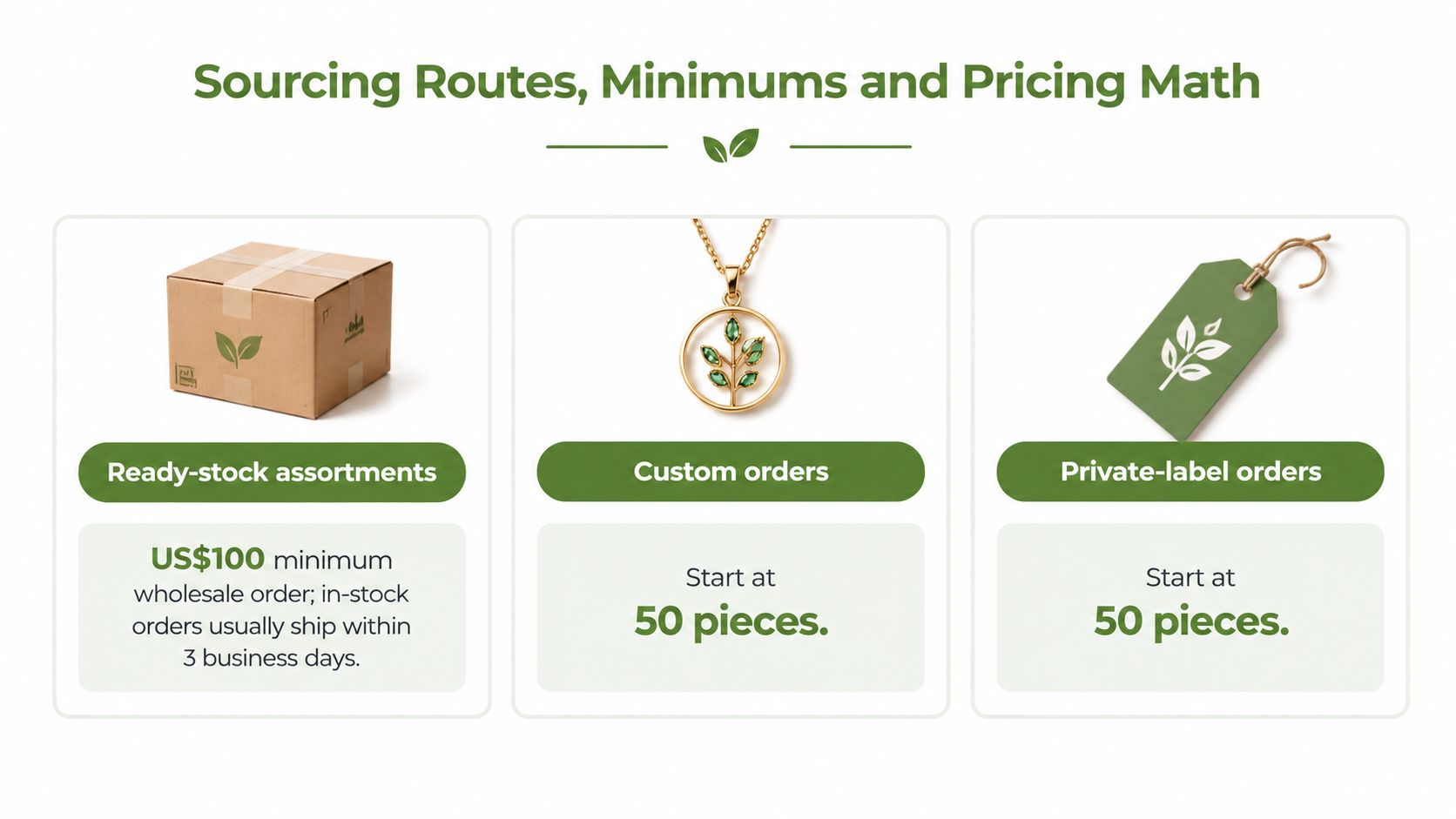
Choose the route before you request a quote. Ready stock tests an assortment with existing specifications. Custom production changes the design or construction. Private-label work adds packaging, engraving, or presentation requirements and may introduce separate component minimums.
| Route | Current published planning figure | Confirm on the quote |
|---|---|---|
| Ready stock | US$100 minimum wholesale order; in-stock dispatch usually within 3 business days | Stock status, exact SKU specification, shipping method, and destination timing |
| Custom sample: brass or 925 silver | Approximately 25–30 days | Design scope, sample charge, components, and approval method |
| Custom sample: stainless steel | Approximately 25–35 days | Grade, construction, finish, and component availability |
| Custom production | Published MOQ starts at 50 pieces per style and color; bulk production is typically 35–45 days after approval and order confirmation | Project-specific MOQ, color splits, packaging minimums, and the dated production plan |
These figures are planning guidance published by HonHo, not a quote for every configuration. Different colors, chains, packaging, stones, or special components may carry separate minimums or timing.
Matching the Route to Your Stage
Ready-stock assortments carry a US$100 minimum wholesale order, and in-stock orders usually ship within 3 business days. Use that route when an existing specification fits the assortment. Custom and private-label orders currently start at 50 pieces per style and color, subject to the project quote.
Samples currently take 25 to 30 days for brass and 925 sterling silver, and 25 to 35 days for stainless steel. the low MOQ jewelry manufacturer guide explains how to plan around minimums, samples, and component constraints. Use the dated quotation as the final commercial record.
A Worked Pricing Example
Build a price from your own landed cost rather than a fixed retail multiple. Add product cost, packaging, freight, duty and taxes where applicable, payment fees, inspection cost, and a reasonable allowance for defects or unsellable units. Divide by sellable units, then apply the margin your channel needs.
Walmart's horseshoe crosses listings page can show that retail offers vary, but a third-party listing is not a material certificate, demand forecast, or target price. Compare like with like: base metal, coating, stone setting, chain, packaging, seller service, and market.
Use ready stock when the existing specification fits. Move to custom only after the design brief, sample approval record, minimum, timeline, and landed-cost model support the decision.
Confirm the Specs and Place Your First Order
Before payment, make the written specification match the sample you approved. Photos help, but they do not replace dimensions, materials, process wording, component details, and a dated quote.
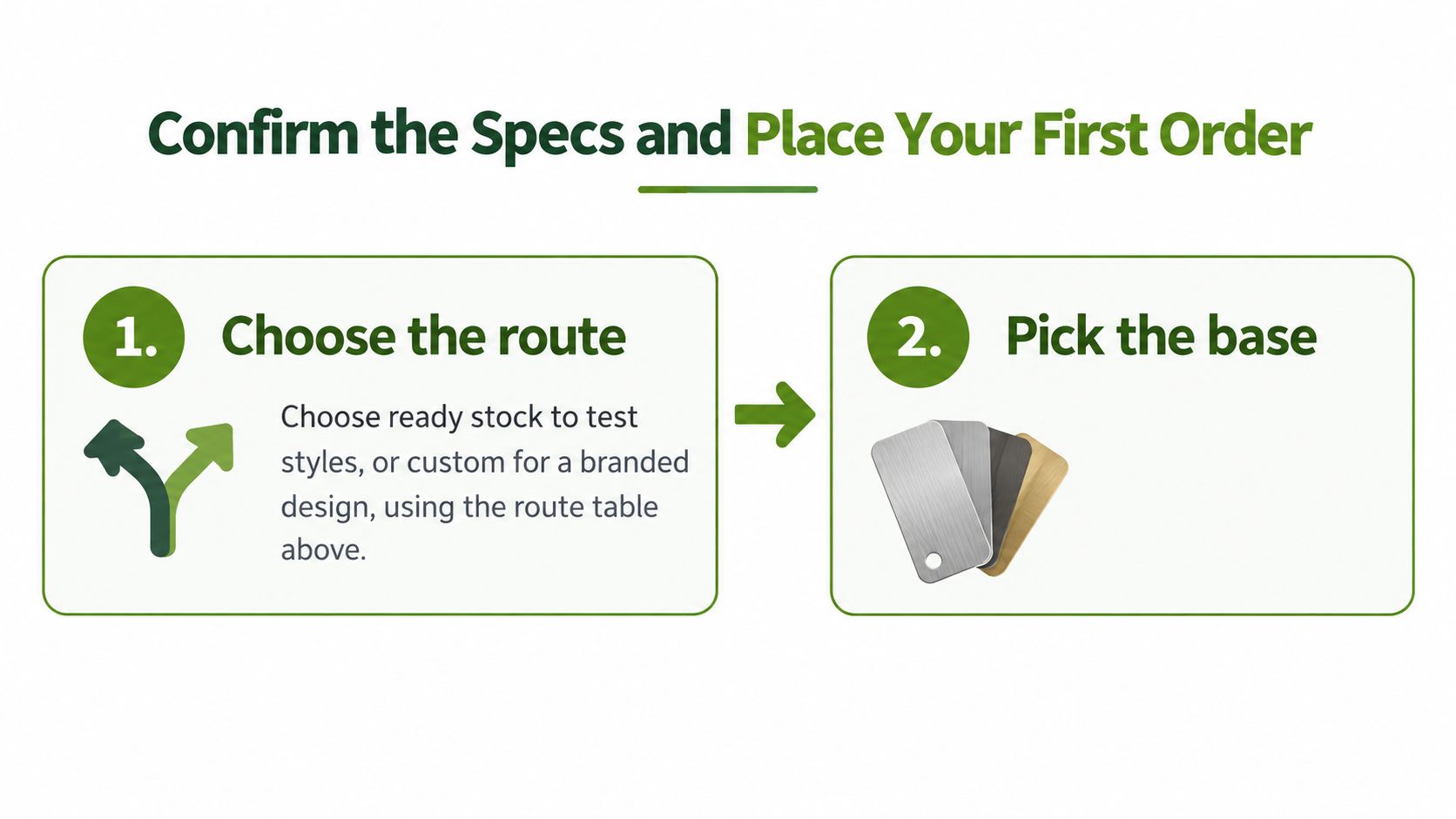
- Choose the route: ready stock for an existing specification; custom for a changed design, component, finish, or branded presentation.
- Lock the component specification: pendant, join, bail or jump ring, chain or cord, clasp, extension, finish, and packaging.
- Record dimensions and tolerances: include pendant size and weight, connector opening, chain length and gauge, and finish reference.
- Approve a physical sample: use the jewelry sample approval checklist and save photos plus written results.
- Confirm claims and care copy: make the tag, listing, invoice, and test evidence agree.
- Restate minimums and timing: list style and color quantities, special-component or packaging minimums, and the dated production plan.
- Save the reorder reference: connect the style code, approved sample, specification revision, and final artwork.
The embedded video below is retained as supplementary context. Use the written specification and physical sample—not a video alone—as the approval record.
Pre-Payment Checklist
- Construction named: nail-inspired jewelry component, actual nail, reclaimed nail, or another documented method.
- Materials confirmed by component: pendant, connector, chain or cord, clasp, and end fittings.
- Finish wording locked: the process and base-metal claim match the evidence for this item.
- Sample record complete: measurements, photos, workmanship notes, and any defined test result are filed.
- Commercial terms dated: unit cost, sample charge, minimums, packaging, production timing, and shipping terms are on the quote.
- Reorder reference saved: style code and specification revision identify the approved version.
Questions wholesale buyers still ask
Does “horseshoe nail” mean the necklace uses a real nail?
No. It may describe only the shape. Require the construction and base metal in writing.
Can the same pendant go on a chain or a cord?
Sometimes, but the connector opening, orientation, and end fittings decide whether it passes and hangs freely. Approve the complete pairing.
Can a gold-colored stainless steel or brass necklace be called vermeil?
No. Vermeil requires a qualifying gold layer over sterling silver and must meet the FTC conditions described above.
What should be sent for a custom quote?
Provide the reference design, construction, base metal, finish, pendant dimensions and target weight, chain or cord specification, clasp, quantity by color, packaging, sales market, and any required test method.
If the design and material route fit your assortment, start by comparing existing options and prepare the specification above before requesting a custom quote. Visit HonHo Wholesale Jewelry with the intended material, finish, component details, quantity by color, packaging, and target market. That information produces a more useful answer than a photo and a target price alone.


