

Does a green mark from a copper ring mean the ring is defective, the customer is allergic, or the metal is reacting as expected? Those are different problems, and a wholesale buyer shouldn't handle them with the same return policy or product description.
For retailers sourcing anillos de cobre, the useful distinction is between patina on the ring, copper compounds transferring to skin, and an inflammatory skin reaction. Choose the actual alloy first, confirm any coating, and give customers care instructions that match the product. A copper-colored photograph isn't a material specification.
Table of Contents
- Copper Rings Compared With Brass, Bronze and Plated Options
- Why Copper Rings Leave a Green Mark on Skin
- Cleaning and Storing Copper Rings Without Damaging Them
- What Copper Rings Can and Cannot Claim for Health
- Common Questions About Copper Rings for Resale
- Checks to Make Before You Order Copper Rings Wholesale
- Choose the Right Copper-Tone Option and Plan Inventory
Copper Rings Compared With Brass, Bronze and Plated Options
Copper and brass are different materials. A brass ring isn't solid copper, even when the colors look similar. Start with the base-metal declaration, not the finish name or the supplier's product photograph.
Copper rings and common alternatives by material
| Material | Main metals | Green-mark risk on skin | Tarnish behavior | Buyer check |
|---|---|---|---|---|
| Solid copper | Copper; exact grade or purity must be declared | Expected when exposed copper meets sweat, salt or humidity | Darkens and forms patina | Confirm the listing says solid copper |
| Brass | Copper and zinc | Possible with exposed copper-containing alloy and sweat | Tarnishes and darkens | Confirm alloy on the spec sheet |
| Bronze | Copper and tin | Possible where copper-containing alloy contacts moist skin | Develops patina over time | Request alloy declaration |
| Copper-plated base metal | Base metal under a copper layer | Possible while copper contacts skin; wear exposes another metal | Coating can wear through, exposing base metal | Ask for plating thickness and wear data |
| Gold plated base metal | Base metal under a gold layer | Possible if wear exposes a copper-containing base | Plating can wear through, exposing base metal | Ask for base metal and plating thickness |
Solid copper gives you the characteristic reddish-orange material through the ring, rather than just at its surface. It can polish brightly, but buyers need to accept its changing appearance.
Brass combines copper with zinc; bronze combines copper with tin, distinctions documented in the Milwaukee Public Museum's account of copper use. Bronze often offers a deeper, warmer appearance, but don't promise a particular patina speed without checking the actual alloy and finish.
Separate the base from the finish
For copper-plated and gold plated rings, ask two separate questions: what's underneath, and what protects it? Plating thickness, surface preparation and wear resistance matter more than a color name.
A catalog example shows how those details should be separated.
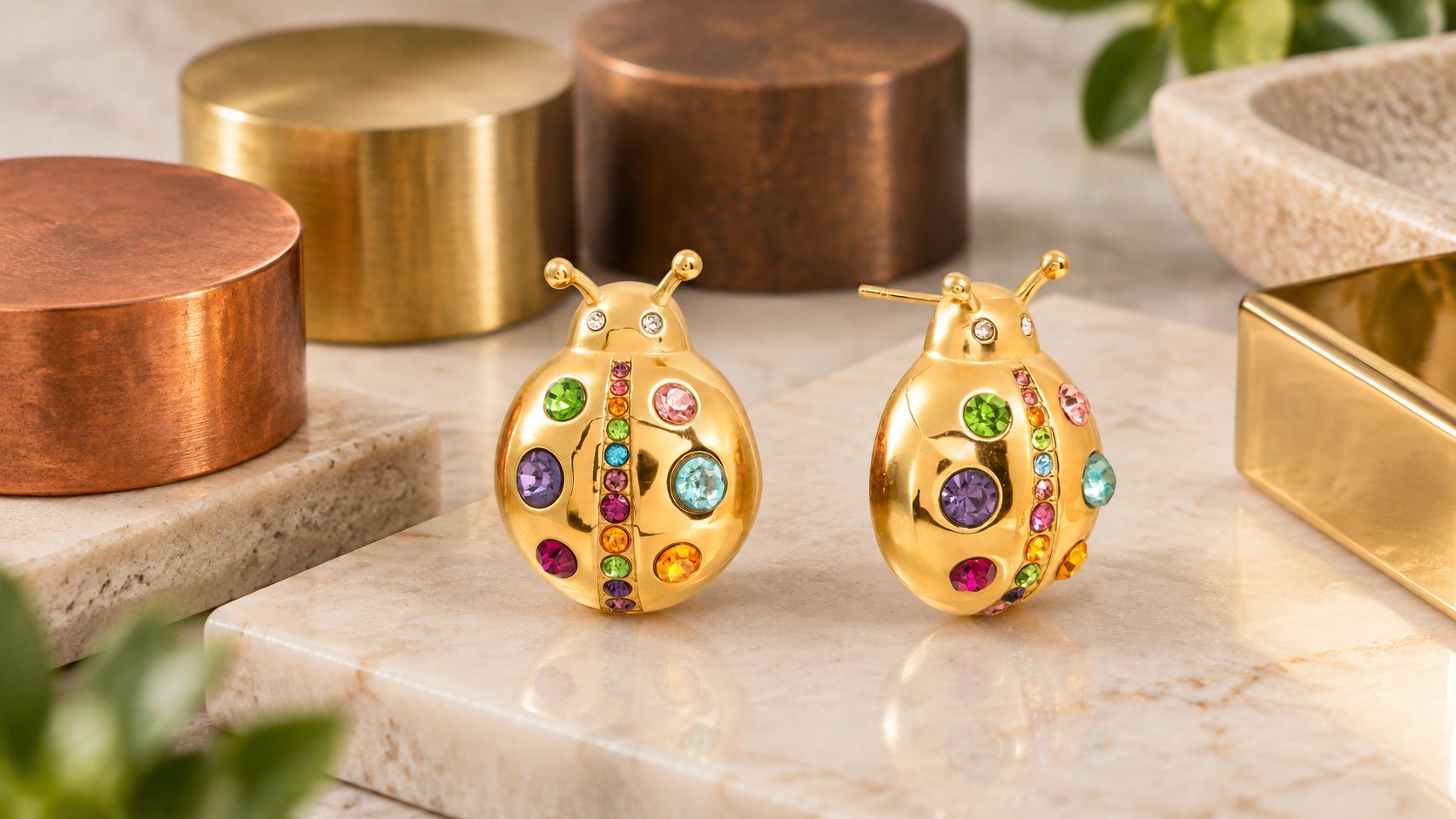
The Gold Plated Stainless Steel Multicolor Ladybug Stud Earrings identify stainless steel as the base and gold plating as the finish. Their domed insect shape and multicolor accents describe appearance, not alloy composition.
Stainless steel is the low-tarnish comparison option, but don't assume every stainless product is 316L. That grade contains nickel, so it isn't a substitute for nickel-release documentation or a guarantee of suitability for every sensitive customer.
If you're also comparing precious-metal inventory, use the wholesale sterling silver rings guide to keep that category separate from copper-based stock.
Buying rule: The base metal named in your listing must match the metal in the ring. Copper tone describes color, not composition.
Why Copper Rings Leave a Green Mark on Skin
Copper reacts with oxygen, sulfur compounds, saltwater and sweat, creating surface compounds including oxides, sulfides, chlorides and carbonates. The Royal Society of Chemistry's explanation of green skin from copper jewelry describes how oils and sweat transfer this surface material onto skin, rather than the mark indicating deterioration inside the metal.
The distinction starts at the contact surface.
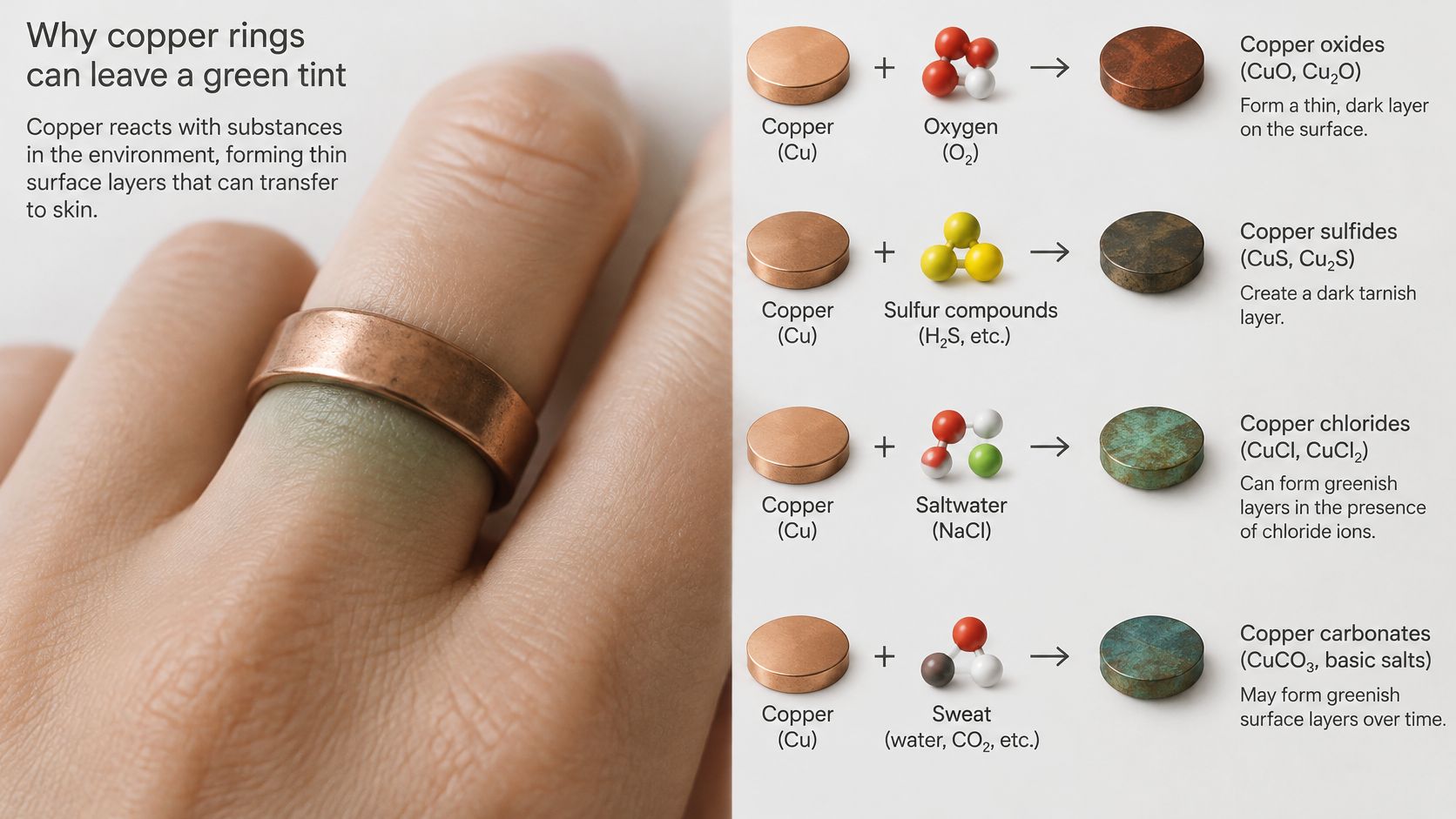
Patina is the changed surface on the ring. Skin staining is material transferred from that surface. Neither observation, by itself, establishes an allergy.
Acidic perspiration can encourage copper release, while heat, exercise, humidity and contact with personal-care products can change wearing conditions. A clinical review of jewelry-related skin effects distinguishes discoloration from irritant or allergic contact dermatitis, which can involve itching, redness, burning, scaling or blisters.
Staining versus a skin reaction
- A painless green or blue mark: Usually points to surface transfer, particularly if it washes away with soap and water.
- An itchy, burning or inflamed area: Needs a different response. Stop wearing the ring, avoid applying it to broken skin, and seek medical advice if symptoms persist.
- Repeated complaints about one style: Review its alloy, coating, solder and components before reordering. Don't diagnose the customer or assume copper is the only metal involved.
A customer-service record should capture the style, wearing conditions, products used around the ring and whether symptoms accompanied the discoloration. That gives the buyer something useful to send the supplier instead of a vague complaint about green fingers.
The embedded video is titled 5 Ways to Keep Copper Jewelry from Turning Your Skin Green. Treat it as a maker reference, not as a finish specification for wholesale inventory.
For customers who want a different maintenance profile, the stainless steel ring buying guide offers a material comparison. Present alternatives as choices with their own specifications, not as universally allergy-proof replacements.
Cleaning and Storing Copper Rings Without Damaging Them
Copper ring care by wearing condition
| Wearing condition | Likely effect | Care step |
|---|---|---|
| Daily wear in normal humidity | Possible light green mark and gradual patina | Wash hands, dry the ring, then put it on |
| Exercise or hot weather | Faster copper transfer from sweat | Remove during training; dry before wearing again |
| Saltwater or chlorinated pool | Increased surface reaction and tarnish risk | Avoid exposure; after accidental contact, rinse with fresh water and dry |
| Lotion, soap or perfume | Possible surface reaction or residue | Apply products first and let them dry before putting on the ring |
| Long storage | Tarnish film can build up | Store separately in a dry pouch with a compatible anti-tarnish strip |
Use a finish-specific cleaning routine
- Confirm the construction before cleaning. Check whether the ring is bare copper, intentionally oxidized, lacquered or plated. A polishing method suitable for bare copper can remove an intentional finish or damage a thin coating.
- Wash gently. For a compatible finish, use mild soap, warm water and a soft cloth to remove sweat and residue. Don't leave the ring soaking, and rinse away the soap rather than letting it dry on the surface.
- Dry completely. Use a clean, soft cloth around the inner band, edges and recesses. Put the ring away only when it's fully dry, because trapped moisture undermines the purpose of protective storage.
- Polish selectively. Use a copper polishing cloth or copper cleaner only on confirmed, uncoated copper and follow the cleaner's directions. Work gently and stop when the intended appearance returns; more polishing isn't automatically better.
- Store separately. Choose a dry pouch that prevents rubbing against other jewelry. Add a compatible anti-tarnish strip if appropriate, and keep the pouch away from damp bathroom storage.
This care summary is useful for staff training and packing instructions.
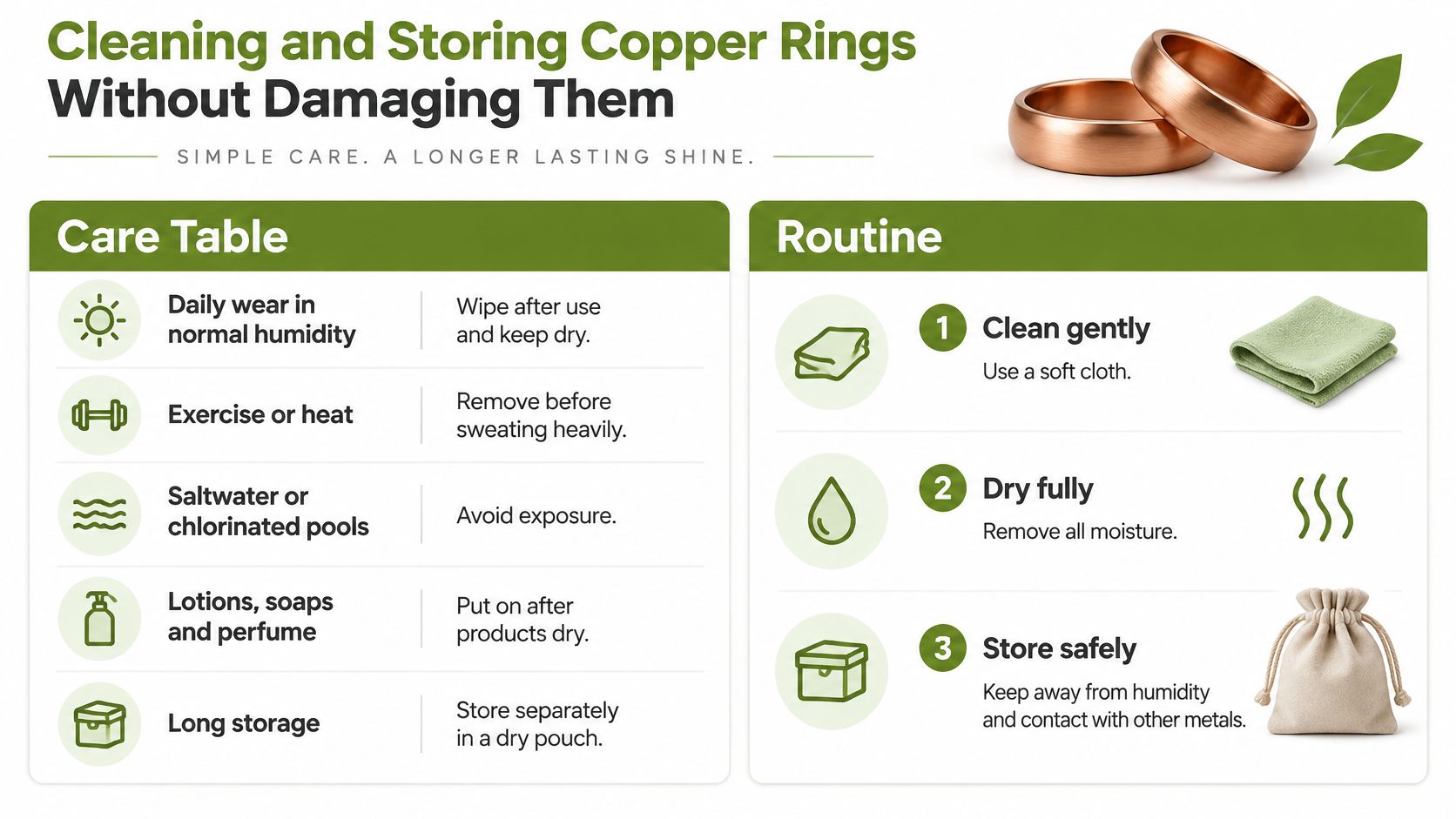
Avoid abrasive scrubbers and strong acids on plated rings. They can strip or thin the coating and expose the base, turning a cleaning attempt into a finish complaint.
Decide whether patina belongs in the design
Natural patina can be polished away on suitable bare copper, but it will return. For a vintage-inspired assortment, preserving the aged surface may make more sense than asking customers to maintain a mirror finish.
A protective lacquer is another option, not a permanent solution. Ask the supplier how to clean it, how wear appears and whether repair or recoating is practical.
Sell the maintenance routine alongside the finish. A bright copper ring and an intentionally aged ring shouldn't receive identical polishing advice.
Use the jewelry care guide as a starting point, then tailor the product card. Include a short cleaning note, a dry-storage instruction and this plain explanation: Patina is a surface reaction that changes the ring's appearance.
What Copper Rings Can and Cannot Claim for Health
Can a copper ring claim to ease arthritis, improve circulation, support detoxification or prevent infection? No. Copper-surface testing does not establish therapeutic benefits from wearing a ring.
A systematic review of copper surfaces indexed by PubMed found that two-thirds of the included studies reported significant reductions in microbial burden. The review's findings concern surfaces under studied conditions, not symptom relief from jewelry.
Controlled contact isn't ordinary wear
Results from engineered copper films don't establish how a finished ring performs on skin. Sweat, dirt, organic material, alloy composition, contact time and cleaning can all affect antimicrobial performance. A lacquered ring also has a different contact surface from exposed copper.
- Arthritis and circulation: Don't promise relief or improved blood flow from a ring.
- Detoxification: Don't describe a green mark as evidence that toxins are leaving the body.
- Infection prevention: Don't position jewelry as a replacement for hand hygiene or appropriate healthcare.
- Antimicrobial wording: Request evidence for the specific alloy, finish and intended use before considering a narrowly framed claim.
Questions about exposure depend on the actual alloy, finish, contact conditions and user. Copper's nutritional role does not establish a therapeutic benefit from wearing a ring, so it does not justify selling jewelry as a supplement.
Listing boundary: Describe the material, design, finish and care. Don't market an accessory as a medical device with unsupported wording.
Apply that boundary to supplier descriptions, marketplace tags, packaging and influencer copy. Removing a claim from the main listing is not enough if the same promise remains on the product card.
Common Questions About Copper Rings for Resale
Is green skin from a copper ring dangerous?
A painless mark that washes away is usually surface staining, not evidence of poisoning or an allergy. Use the staining-versus-reaction checklist to distinguish it from symptoms that warrant stopping wear and seeking medical advice.
Is brass the same as copper?
No, brass is a copper-and-zinc alloy, and the listing should name brass rather than solid copper. The material comparison helps buyers separate alloy names from surface finishes.
Do copper rings help arthritis or circulation?
The evidence discussed for copper surfaces doesn't establish those benefits for worn rings. Keep product wording within the health-claim boundaries, including in customer reviews you choose to reuse as marketing.
Can I sell copper rings in the EU?
Potentially, but only after the product and documentation have been checked for the destination market. Copper content does not remove the need to assess nickel release from the alloy, solder, plating system and other components. Request the documentation in the wholesale buying checklist before publishing a listing rather than relying on a generic allergy claim.
What should a Spanish-speaking shopper search for?
Anillos de cobre means copper rings, anillos de latón identifies brass rings, and cardenillo refers to verdigris. Use these terms where they accurately describe the item, while keeping the actual alloy clear in English-language headings and listing copy.
Should every copper-colored ring use the same care card?
No, bare metal, lacquer and plating need different handling. Adapt the cleaning routine to the supplier-confirmed finish, especially before recommending polish or tarnish removal.
Checks to Make Before You Order Copper Rings Wholesale
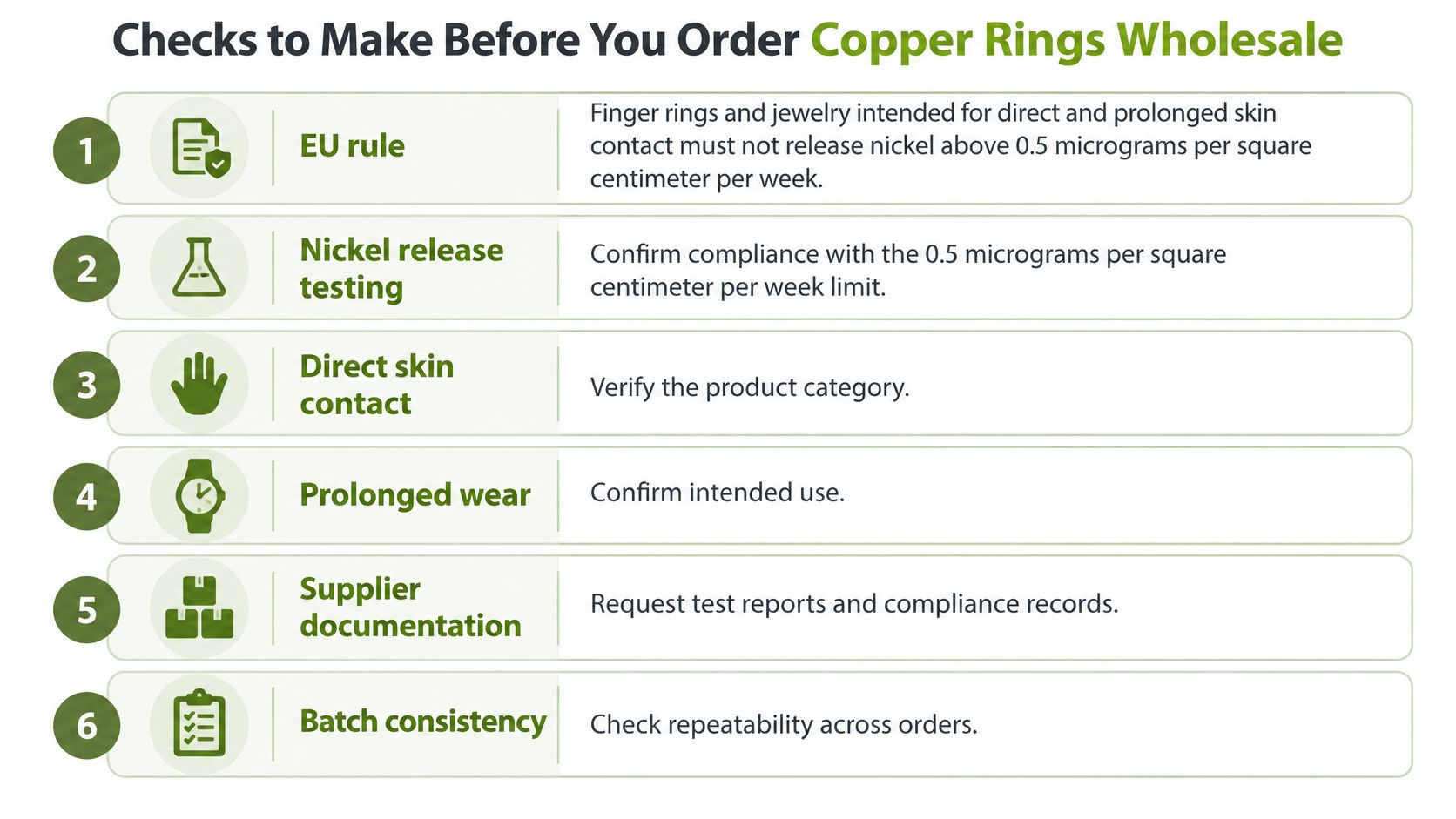
The EU nickel-restriction directive is a historical source. For current EU checks, use REACH Annex XVII, entry 27: nickel release from post assemblies inserted into pierced body parts must be below 0.2 micrograms per square centimeter per week; for finger rings and other articles intended for direct and prolonged skin contact, the limit is 0.5 micrograms per square centimeter per week. A non-nickel coating on those skin-contact articles must keep nickel release within the applicable limit for at least two years of normal use.
Use the latest consolidated rules and relevant referenced test methods for the destination market. A material declaration, a nickel-content statement and a nickel-release test answer different questions, so one cannot stand in for the others.
Request a complete buying file
- Base-alloy declaration: Require a clear material name, such as solid copper, brass, bronze or a specified plated base. Reject descriptions that provide only a color.
- Plating or coating specification: Ask for the base metal, coating type, thickness and available wear information. Confirm whether the inside of the band receives the same treatment.
- Nickel status: Include the alloy, plating system, solder and components. A clean-looking outer finish doesn't identify everything underneath.
- Relevant test results: For EU sales, request nickel-release documentation that corresponds to the product and finish you intend to buy.
- Written commercial terms: Confirm sample lead time, minimum order quantity and the specification that will apply to repeat orders.
- Customer-facing care card: Obtain cleaning instructions and a patina explanation you can adapt without making unsupported durability promises.
Use this visual checklist when gathering supplier records.
Approve the sample and the paperwork together
A generic hypoallergenic claim doesn't replace a material declaration. Compare the physical sample with its written specification, then use the jewelry sample approval checklist to record finish, construction and packaging decisions.
Check the inner band for rough edges, inspect coating coverage and photograph the approved condition. Sample inspection helps identify visible workmanship issues, but it doesn't replace laboratory compliance testing.
Price from the complete landed cost, including freight, applicable import costs, packaging and inspection. Then assess whether your intended markup can absorb customer support and potential returns arising from poorly explained patina.
Choose the Right Copper-Tone Option and Plan Inventory
For a craft-led boutique that accepts natural aging, choose confirmed solid copper and make the changing surface part of the product presentation. For a fashion store seeking a copper-tone or warm-metal look, compare brass and plated options through their written alloy and coating specifications rather than assuming similar colors deliver similar wear.
For customers with metal sensitivities, consider documented stainless steel alternatives, including confirmed 316L where appropriate, without promising universal tolerance. Keep individual suitability separate from a supplier's compliance paperwork.
Build the assortment around your customer
Start with evergreen shapes such as plain bands, simple stack rings and restrained geometric designs. Reserve more of the buying budget for those repeatable styles, while ordering trend-led motifs in test quantities until your own sales justify expansion.
Compare copper-tone products against relevant brass and plated competitors, not against precious-metal rings solely because the finish photographs similarly. Set retail pricing from landed cost and your store's markup policy, then check whether the final ticket makes sense for the material disclosure, workmanship and care burden.
If you're considering a coating described as PVD, use the gold PVD coating guide to prepare supplier questions. Don't infer that a gold-colored product uses PVD, or that a process name alone proves a particular service life.
- Ready-to-buy assortment: Prioritize existing styles when you need to test customer demand without developing a new design.
- Private-label requirement: Consider customization only when a distinctive shape, engraving or packaging solves a specific merchandising need.
- Repeat purchase: Keep the approved sample and specification together so a reorder isn't judged from memory.
Let samples decide the bulk order
Order samples in the material closest to your target appearance. Match the alloy declaration to the listing, compare the finish under consistent lighting, and assess patina and visible wear without treating an informal wear trial as a certification.
Approve the material, customer description and care card before committing to bulk stock. That sequence gives your sales team a product it can explain accurately, not just a photograph it can promote.
HonHo Wholesale Jewelry offers ready-to-buy wholesale assortments in stainless steel, brass and 925 sterling silver, giving retailers alternatives to compare when planning a copper-tone collection. Browse HonHo Wholesale Jewelry for ring styles, materials and finishes for your store, then confirm each product's base metal and coating before ordering samples.


