

A chain that looked bright in your product photos now looks flat under the boutique lights. Before reaching for metal polish, check what you're holding: bare steel, gold plating, enamel, and stone settings don't belong in the same cleaning batch. To shine stainless steel jewelry safely, identify the finish first, remove surface residue gently, and buff only as that finish allows.
Table of Contents
- Why Stainless Steel Jewelry Loses Its Sparkle
- What Makes Stainless Steel Stay Shiny in the First Place
- A Safe At-Home Routine for Everyday Pieces
- Matching the Method to the Finish in Your Inventory
- Polishing Stainless Steel the Right Way
- Home Remedies Worth Skipping and What to Use Instead
- Building a Care Routine for Your Store and Your Customers
Why Stainless Steel Jewelry Loses Its Sparkle
A cloudy necklace doesn't automatically need polishing. Skin oils, sweat, cosmetics, and dust can obscure the reflective surface even when the stainless steel underneath remains intact. Water spots and retained salts can also leave a dull appearance after washing, which is why drying matters as much as cleaning. The British Stainless Steel Association's explanation of stainless steel's development and maintenance traces the alloy's history; it does not prescribe jewelry-cleaning methods.
At the boutique counter, identify which of three conditions you see: removable residue, scratches, or a changed decorative finish. They can look similar under display lighting, but harder rubbing will not solve all three.
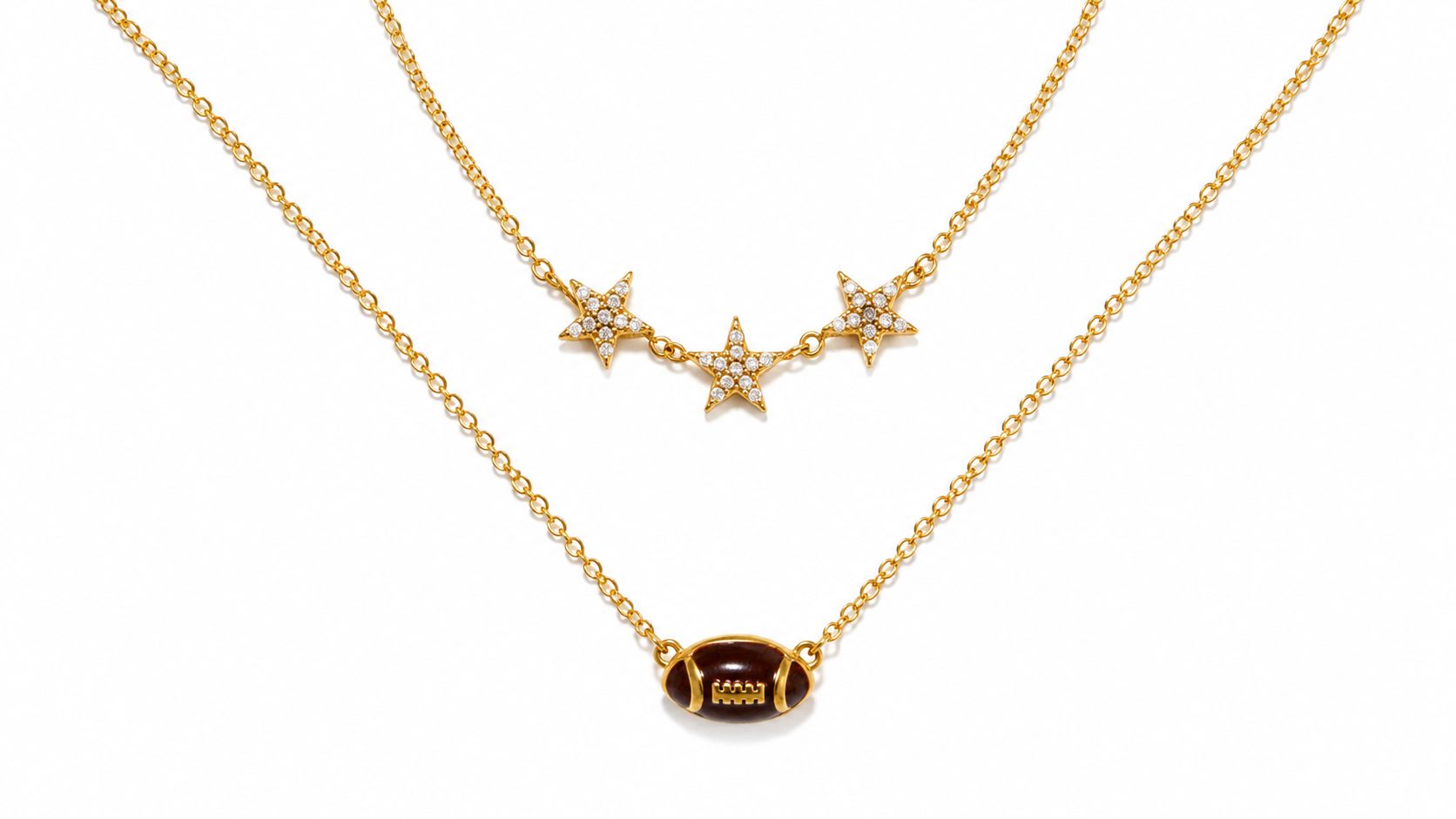
A layered, accented design illustrates why the whole construction needs inspection, not just the chain.
Separate dirt from damage
Check the broad surfaces, then the clasp, link joints, pendant edges, and settings. If gentle cleaning restores the appearance, you were dealing with deposits. If a clean, dry piece still has uneven color, visible scratches, or pits, stop treating it as a routine shine job.
Packing-bench rule: Clean before deciding that a piece needs polishing. Don't use abrasion to diagnose dullness.
Perfume, sunscreen, and lotion exposure are reasons to review daily handling, while swimming raises a separate question about water chemistry and decorative components. Use the stainless steel jewelry waterproof guide when explaining those distinctions to customers. Avoid promising that every cloudy piece will become like new, especially when plating wear or scratches are already visible.
What Makes Stainless Steel Stay Shiny in the First Place
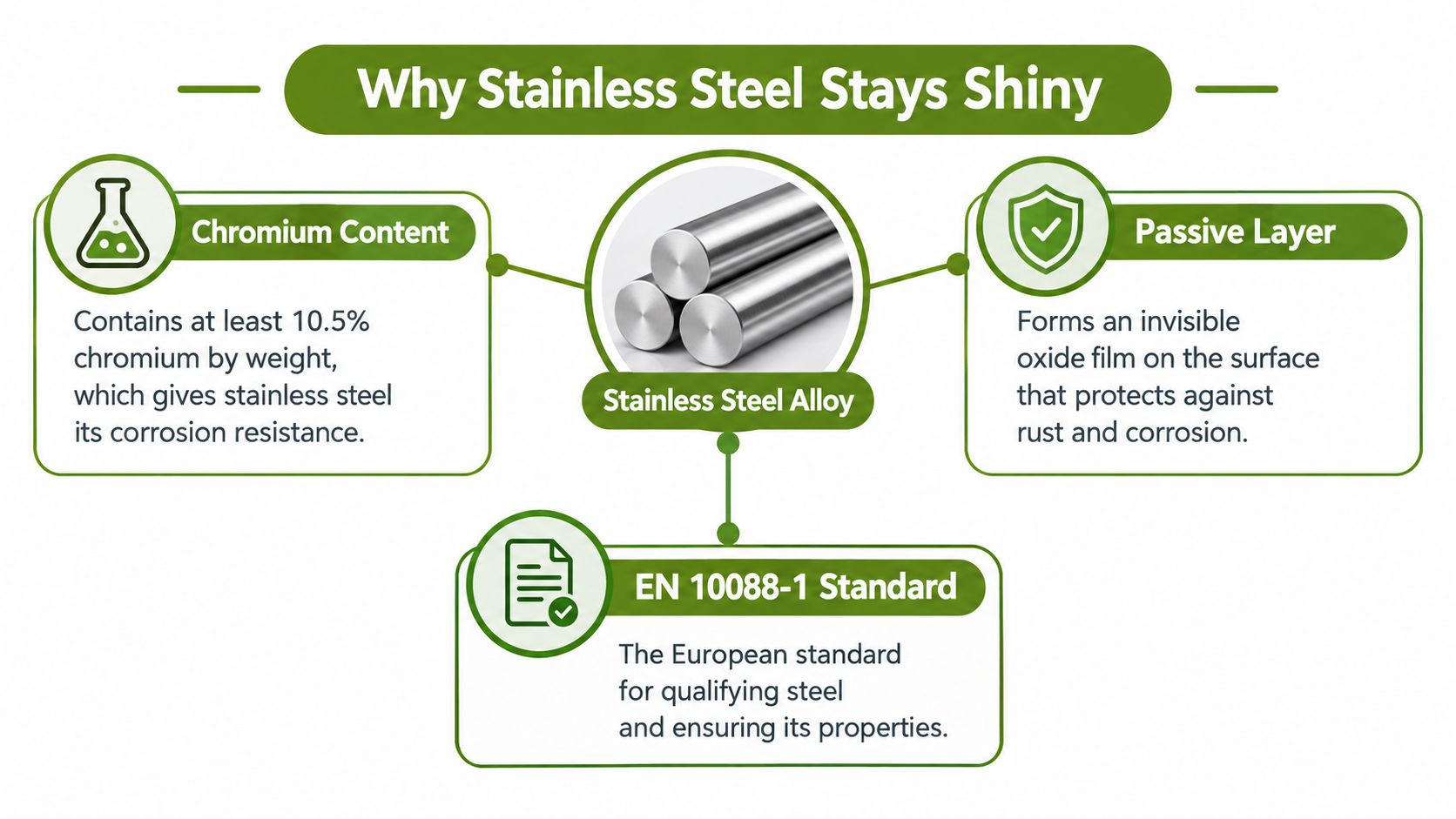
Stainless steel's corrosion resistance comes from its chemistry. Under EN 10088-1, stainless steel must contain at least 10.5% chromium by weight and no more than 1.2% carbon; oxygen allows chromium to form a protective passive oxide film approximately 1–5 nanometres thick, which normally repairs minor damage when oxygen remains available, according to the British Stainless Steel Association's passive-layer explanation.
That film protects the alloy. The smoothness and cleanliness of the finished surface determine how clearly it reflects light. Skin oils and cosmetics can cover that surface without meaning the alloy has failed, whereas chloride-bearing deposits and harsh treatment can create more serious problems.
The relationship between alloy chemistry and protection is easier to understand visually.
The base metal isn't the whole product
Consider the Gold Plated Stainless Steel Football and Star Double-Chain Necklace. Its stainless steel base carries gold plating, a brown football inlay, and clear-stone accents whose compositions await supplier confirmation. The base material alone therefore isn't enough to approve an abrasive cleaner or immersion method.
For buying decisions, separate the alloy specification from the finish specification. The guide to 316L stainless steel jewelry provides material context, but never label an individual item 316L unless its specification confirms that grade.
Aim to preserve the existing finish and avoid repeated material removal. A protective alloy doesn't make a decorative coating abrasion-proof, and self-repair of the passive film doesn't restore scratched engraving or missing plating.
A Safe At-Home Routine for Everyday Pieces
Set out a clean microfiber cloth, mild dish soap, a very soft-bristled toothbrush, and a lint-free drying cloth. Use lukewarm water rather than hot water, and confirm that the piece is suitable for brief washing before starting. Finish-sensitive exceptions need the more conservative treatment described below.
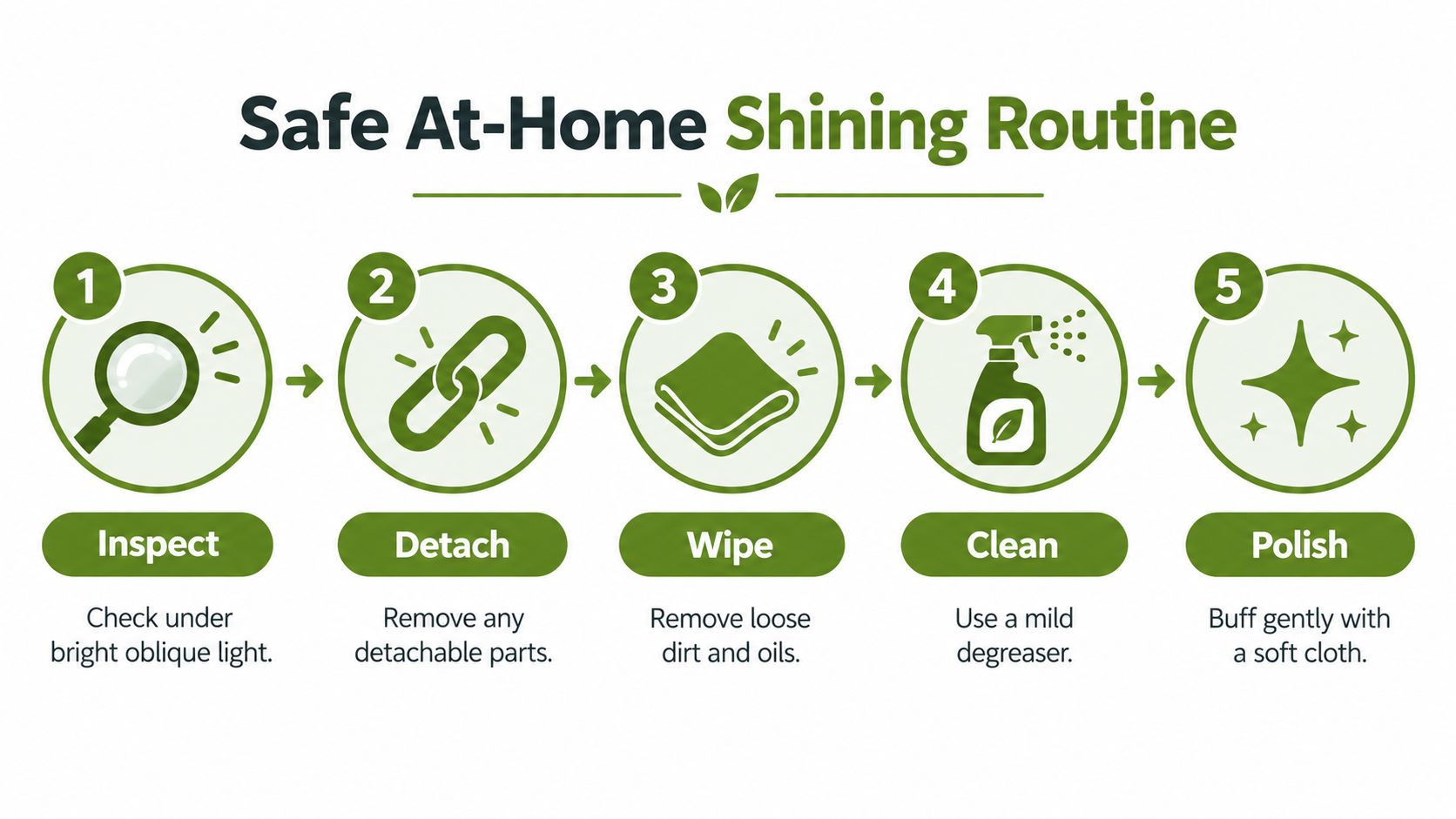
Keep the sequence controlled rather than adding stronger products as you go.
Work from inspection to drying
- Inspect under angled light. Tilt the piece beneath a bright lamp. Look for loose settings, damaged plating, existing scratches, and areas that shouldn't get wet.
- Detach only removable components. Separate parts designed to come apart. Don't pry out stones or disturb fixed settings.
- Lift loose grit. Wipe lightly with clean microfiber. Change to a clean area of the cloth rather than dragging collected dirt across the surface.
- Wash briefly. Dilute a small amount of neutral, non-chloride mild dish soap in lukewarm water. Use a soft cloth with light pressure; reserve the very soft toothbrush for suitable bare-metal crevices.
- Rinse completely. Remove the soap with clean water, keeping contact brief and appropriate to the construction.
- Dry immediately. Use the lint-free cloth, then finish with a light dry buff along the existing grain or polish direction.
Gentle means no forceful scrubbing, prolonged immersion, or repeated rubbing at a stubborn mark. The ASTM A380 cleaning standard lists detergent, alkaline, solvent, steam, and ultrasonic methods for new stainless steel parts, equipment, and systems. It does not approve those industrial methods for finished jewelry. Coatings, resin, adhesives, enamel, and stones may require a milder process or no immersion at all.
The embedded video is titled Streak Free Stainless Steel Polish; it is not jewelry-specific. Use it only as a visual reference and follow the finish restrictions above for plated, coated, glued, or stone-set pieces.
Inspect the result, not just the shine
Under bright, oblique light, look for no remaining haze, residue, new directional scratches, or plating-color change. Existing damage should be recorded, not rubbed until it becomes worse. Keep the jewelry care guide available for staff and customer handover.
Matching the Method to the Finish in Your Inventory
Silver-colored doesn't necessarily mean uncoated, and gold-colored doesn't confirm PVD. Check the product specification rather than guessing from appearance. Until you know the finish, treat the piece as sensitive.
Applied finishes deserve more conservative handling than bare metal. The National Park Service's guidance on caring for metal objects takes the stricter museum-conservation position that applied finishes should not be cleaned during emergency treatment. That guidance is not a retail jewelry-care protocol, but it reinforces the need to check the finish before using water, chemicals, or abrasion. Follow the item's care instructions and avoid abrasive polishing of decorative layers.
Cleaning Choices by Stainless Steel Finish
| Finish | Safe cleaner | Safe tool | Avoid |
|---|---|---|---|
| Confirmed bare stainless steel | Diluted mild, non-chloride soap and lukewarm water | Microfiber cloth; very soft brush in suitable crevices | Rough pads, steel wool, abrasive household powders |
| Gold-plated or rose-gold-colored plating | Diluted mild soap applied sparingly | Soft damp cloth | Abrasives, acidic cleaners, prolonged soaking |
| Silver finish with an applied coating | Manufacturer-approved mild cleaner | Soft cloth | Assuming it can be polished like bare steel |
| Confirmed PVD coating | Brief mild-soap cleaning if construction permits | Soft cloth | Polishing compounds and abrasive pads |
| Two-tone | Cleaner suitable for the more sensitive finish | Soft cloth | Buffing across contrasting finishes |
| Enamel or resin accents | Sparing application of diluted mild soap where approved | Soft cloth | Soaking, harsh brushing, heat |
| Stone-set, pearl-accented, or glued components | Barely damp cleaning, subject to component guidance | Soft cloth around settings | Immersion, aggressive brushing, unverified cleaners |
For a mixed-material piece, let the most sensitive component set the cleaning limit. A steel chain doesn't make an unknown stone or adhesive suitable for soaking.
For PVD buying questions, consult the gold PVD coating guide, then verify that the specific product carries that finish. Don't transfer a coating claim from one listing to another.
When the finish is unknown, wipe rather than scrub. Confirm the specification before choosing a stronger method.
Test an inconspicuous area before broader cleaning, then check it after drying. If the cloth picks up color or the surface changes appearance, stop. For resale inventory, a cautious pause is preferable to creating a visibly mismatched piece.
Polishing Stainless Steel the Right Way
Polishing changes a surface; cleaning removes deposits. Reserve corrective polishing for confirmed bare stainless steel with a suitable finish. A brushed area, logo, engraving, or decorative coating shouldn't receive the same treatment as a plain mirror-finished panel.
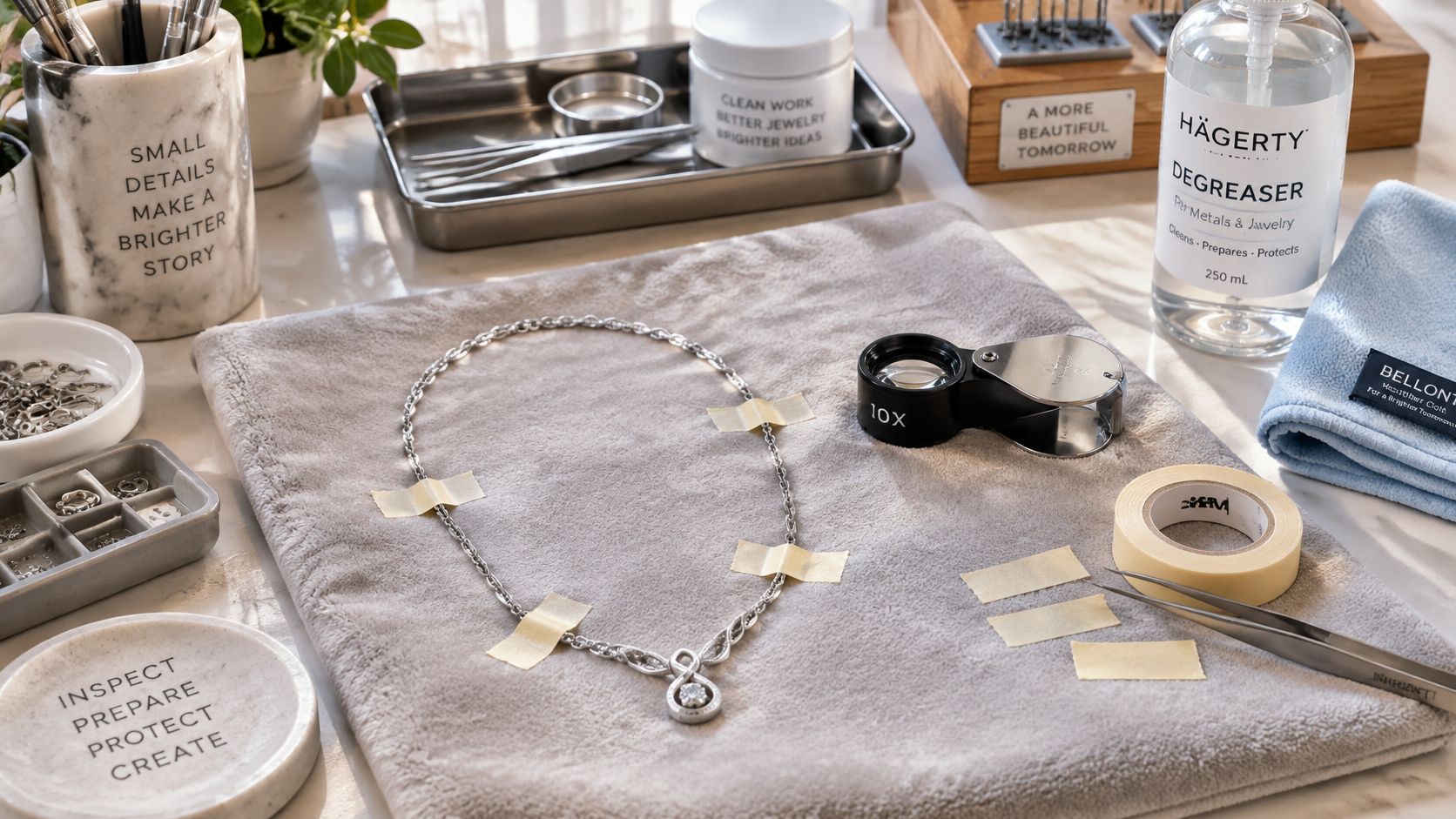
A small, controlled setup is enough.
Preserve the original geometry
Clean and degrease first, then inspect under magnification. Protect stones, enamel, logos, and brushed zones before touching the reflective bare metal. Choose a clean jewelry-grade cloth explicitly suitable for stainless steel; a cloth containing polishing compound isn't automatically safe for every finish.
Use light pressure and short passes in a consistent direction. Keep very fine nonwoven abrasives out of routine packing-station care; they belong only in a confirmed, controlled refinishing process. Remove any compound completely with an appropriate detergent wash and thorough drying.
- Stop at the original gloss. Extra passes aren't an improvement if they alter the design.
- Protect edges and settings. Uncontrolled buffing can round edges, soften engraving, and open gaps around settings.
- Refer substantial damage. Deep scratches, corrosion pits, and worn plating need professional assessment, not repeated consumer abrasion.
Why smoothness matters
A 2011 surface-finish research discussion tested 316L plates in aerated chloride solutions. Under its 1,000-ppm chloride, 30°C conditions, the authors reported that repassivation required a finish better than approximately Ra 0.25 micrometers.
That result belongs to the tested industrial specimens and electrochemical setup. It does not predict jewelry wear life or provide a home-testing target. It does support protecting a smooth, uniform finish from rough tools. For retail handling, use the sequence clean, protect, polish selectively, wash, dry, inspect.
Home Remedies Worth Skipping and What to Use Instead
Kitchen-shelf remedies create an unnecessary gamble when an assortment includes coatings and unknown accents. A cleaner that leaves bare metal looking brighter may still damage the decorative layer that makes a piece saleable. That's the wrong trade-off for stock intended to match product photography.
The Spruce's stainless steel jewelry cleaning guidance warns about finish-sensitive cleaning, including risks from ultrasonic treatment and abrasive or acidic remedies. Judge the complete piece, not just the steel beneath it.
Replace the hack with a controlled tool
- Baking soda paste: Skip abrasive kitchen pastes on decorative finishes. Use diluted mild soap for removable grime.
- Vinegar and lemon juice: Don't treat household acids as universal jewelry cleaners. Use a damp microfiber cloth for sensitive surfaces.
- Toothpaste: Avoid using a dental cleaning product as a mirror-finish polish. Choose a suitable jewelry cloth for confirmed bare steel, or plain microfiber for coatings.
- Ultrasonic baths: Don't batch-clean plated, glued, or stone-set stock without validated instructions. Use a soft brush only where the construction permits, keeping away from vulnerable settings.
Citric acid's use in industrial passivation doesn't validate a homemade jewelry soak. Controlled citric-acid passivation research concerns defined metal-treatment conditions, not a universal recipe for finished necklaces and rings.
A brighter surface isn't a successful result if the process also removes color or weakens a setting.
Also exclude chlorine bleach, hydrochloric-acid cleaners, steel wool, and household scouring powders from the jewelry-care station. For customer questions about gradual color wear, the guide to how long gold plating lasts helps distinguish maintenance from coating loss. Cleaning can remove residue; it can't replace missing plating.
Building a Care Routine for Your Store and Your Customers
Build care into inventory handling before an order reaches the packing bench. The mild-soap, soft-tool, thorough-rinse, immediate-dry approach is supported by Jewelers Mutual's stainless steel jewelry cleaning guidance. Apply it only after sorting by finish and construction.
For a boutique or Shopify store, consistency matters more than making every piece maximally reflective. Your customer should receive the finish shown in the listing, whether that finish is mirror-bright, softly brushed, or gold plated.
Build checks into the handling workflow
- At receiving: Match the material and finish to the listing, inspect accents and settings, and record visible defects before cleaning.
- Before photography: Remove handling marks with the appropriate cloth. Don't polish away an intentional surface texture to make it photograph brighter.
- Before packing: Check under angled light and keep pieces separate so they don't rub against one another.
- At customer handover: Include finish-specific instructions rather than a universal “polish regularly” message.
- When a return arrives: Diagnose deposits, coating wear, and physical damage separately before deciding whether the item can be resold.
A useful care card names the finish, the permitted cleaning method, the drying requirement, and the treatments to avoid. Customers with mixed-material jewelry should receive the sensitive-component instructions, not the bare-steel version.
This approach gives staff a clearer basis for handling complaints and protects the consistency of a private-label assortment without promising fewer returns or better reviews as a guaranteed result. Before ordering, ask whether the supplier identifies the base material, coating, and accent composition clearly enough to support that care card. The right way to shine stainless steel jewelry starts with identifying the whole piece, including its finish and accents.
HonHo Wholesale Jewelry offers ready-to-buy wholesale necklaces, earrings, rings, and bracelets across stainless steel, brass, and 925 sterling silver assortments. Visit HonHo Wholesale Jewelry to compare styles and listed finishes for your store, then pair each selection with a care routine that protects its intended appearance.


