

For resale inventory, the most effective tarnish-control routine is to keep sterling silver clean and fully dry, isolate each piece from sulfur-emitting materials, limit humid-air exchange with suitable packaging, and inspect stock before it reaches the display. Tarnish is usually reversible, but preventing it reduces polishing labor, uneven presentation, and avoidable handling before a sale.
Sterling silver doesn't rust. It tarnishes when airborne sulfur compounds, especially hydrogen sulfide (H2S) and carbonyl sulfide (OCS), react with the metal surface and form silver sulfide (Ag2S), which is the dark film buyers see on stock and display pieces (cultural heritage conservation guidance). For wholesalers and boutiques, that reaction matters because it affects how polished, fresh, and sellable inventory looks when it reaches the floor.
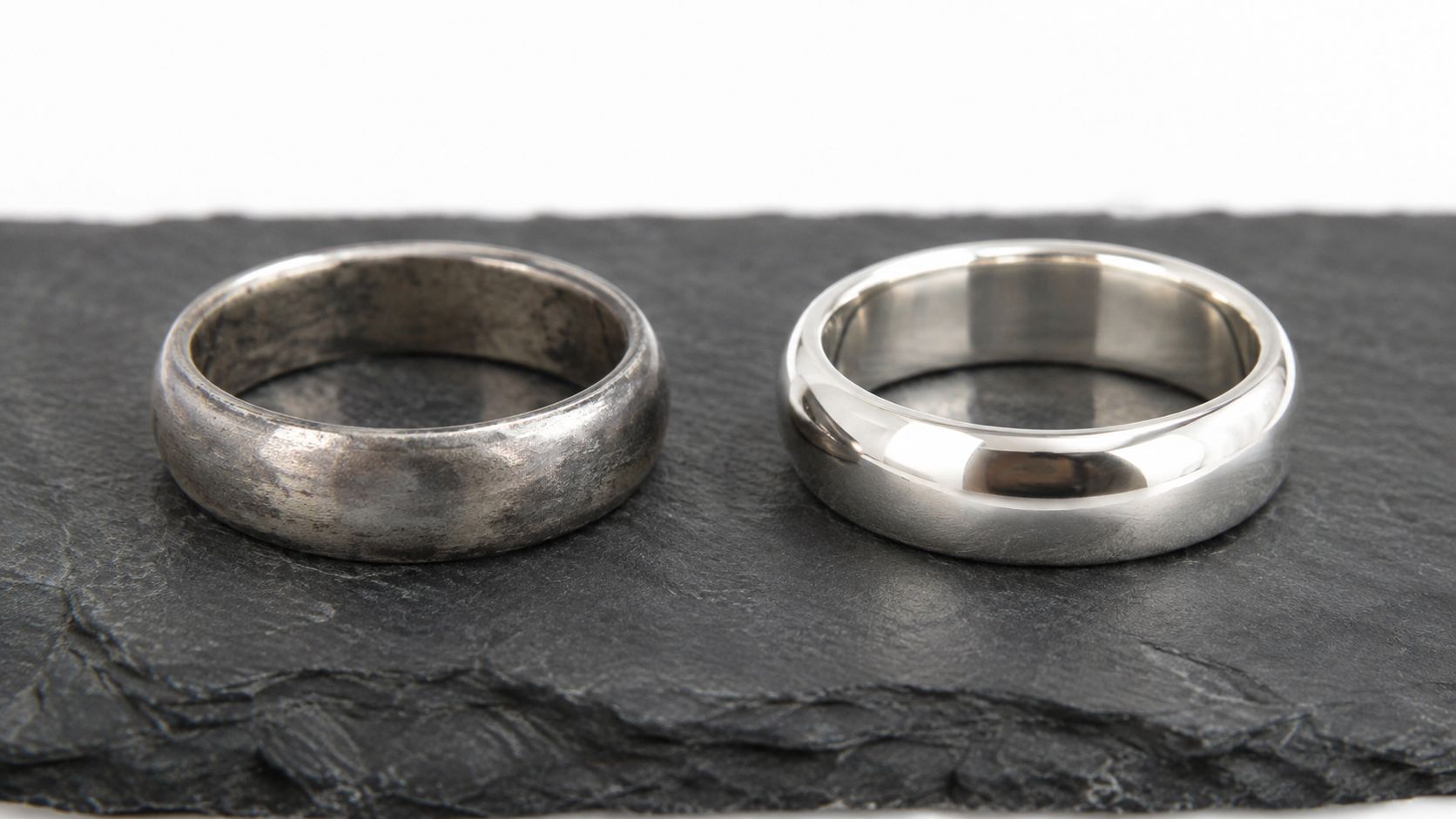
A single pendant at home can be cleaned later. A tray of multiple SKUs in receiving, back-stock, or a display case is different: one weak step can affect an entire lot. Buyers therefore need a documented routine that follows the jewelry from incoming inspection through storage, merchandising, packing, and customer handoff.
Table of Contents
- Why Sterling Silver Tarnishes and What It Means for Resale
- The Two Conditions That Control Tarnish Most
- How to Store Sterling Silver So It Stays Bright Longer
- Daily Care Habits That Prevent Tarnish Between Wears
- Choosing the Right Prevention Method for Display Bulk and Customer Use
- Your Tarnish Prevention Plan for Wholesale Sterling Silver
Why Sterling Silver Tarnishes and What It Means for Resale
A buyer usually notices tarnish before they notice craftsmanship. A ring can have a clean setting and solid weight, but if the surface looks hazy or dark, it reads as old stock. That's why prevention is part of inventory control, not just aftercare.
Tarnish is chemistry, not wear-and-tear
Sterling silver tarnish is a surface reaction, not proof that the alloy is “fake” or structurally damaged. The Palomar conservation paper explains how sulfur-containing gases drive the reaction. Higher humidity can accelerate it, but that relationship is a control principle—not a promise that every retail environment or package will produce the same result.
For resale, the important point is simple. Tarnish lowers perceived freshness, and perceived freshness drives how confidently a boutique can present a piece at full markup. You can often polish sterling silver back, but polishing is labor, and every extra touch raises handling risk for delicate settings, chains, and ball backs.
If fresh stock dulls quickly, investigate the packaging, handling history and finish together before assigning a cause.
Why inventory behaves differently from personal jewelry
Consumer advice usually assumes one ring or one chain at a time. Wholesale inventory adds stacked trays, shipping cartons, polybags, display boxes, and mixed materials, all of which change the exposure profile. A closed drawer at home is not the same as a carton that spends days in transit, then weeks on a shelf.
That's why tarnish prevention protects margin. A piece that arrives bright is easier to photograph, easier to merchandise, and easier to sell without extra handling. HonHo Jewelry Wholesale's wholesale rings sterling silver collection fits that logic well because rings are touched often and show surface changes quickly.
The Two Conditions That Control Tarnish Most
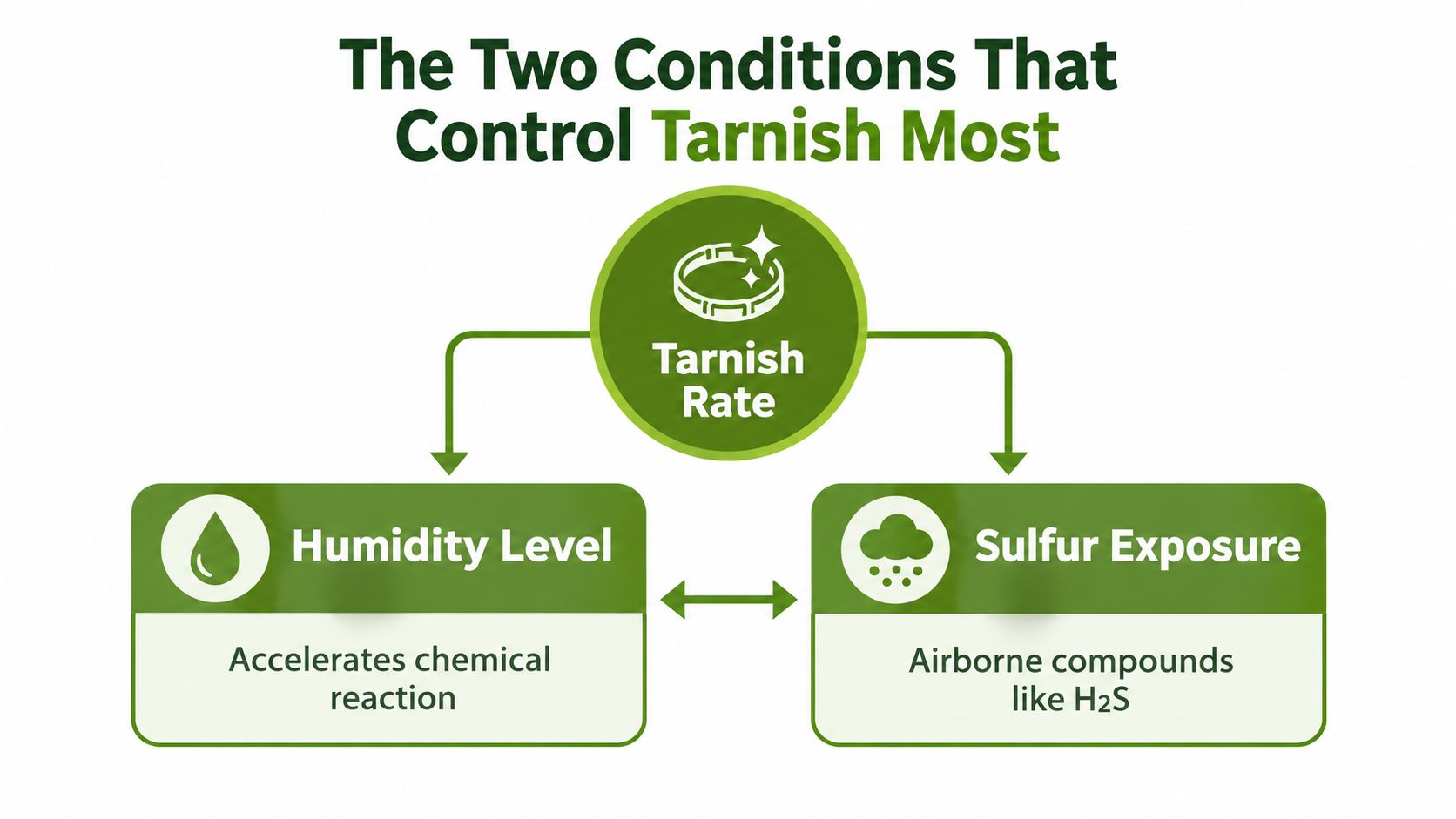
Humidity and sulfur exposure control most of the risk. Dry air slows the reaction, but dry air by itself won't solve the problem if sulfur compounds are still reaching the silver. Likewise, a sealed bag helps only if the contents are dry and the surrounding materials aren't releasing contaminants.
Humidity changes how fast the surface reacts
The Canada Conservation Institute guidance recommends dry storage below 50% RH for silver, while this jewelry care guidance offers additional retail context. For commercial inventory, monitor the actual stockroom and package rather than treating one RH reading as a universal pass/fail limit: sulfur sources, enclosure tightness, temperature shifts, and how often the package is opened all change exposure.
That's why bathrooms, basements, and humid stockrooms are bad places for sterling silver. Even a nice box won't help much if the room itself keeps feeding moisture into the package. Display lighting can add heat, but the bigger issue is usually the environment around the case, not the bulb alone.
Sulfur still matters when the air feels dry
Silver tarnishes because of sulfur compounds, including H2S and OCS, which can still be present even in controlled spaces (Palomar conservation paper). That's the reason airtight storage works better than an open tray. It blocks outside air, and if you add the right sorbent, it also reduces what's inside the container.
Conservation guidance also warns that pollutants can still tarnish silver even when RH is controlled, which is why humidity alone is never the whole answer (Canada Conservation Institute guidance). For buyers, that's the useful mental model, low moisture plus sulfur control, not one or the other.
Use the jewelry materials and plating guide to separate what needs the strictest storage from what can tolerate lighter handling.
How to Store Sterling Silver So It Stays Bright Longer
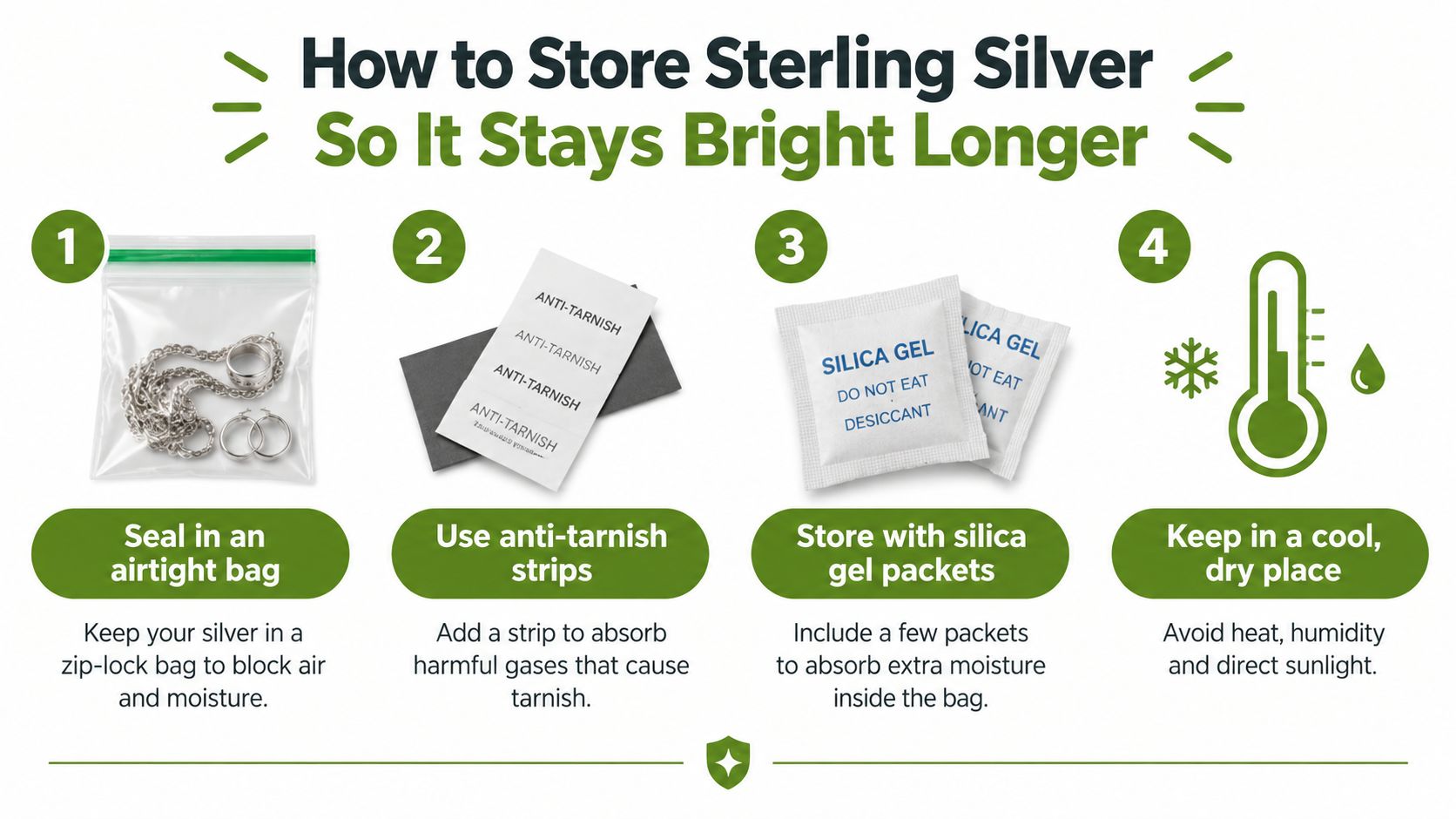
Storage should work like a layered barrier, not a single trick. The silver needs to be isolated from humid air, protected from sulfur exposure, and kept clean enough that dust and residue don't become part of the problem. That's the same logic behind conservation packaging and the practical retail methods that keep pieces bright longer (tarnish-proof silver guidance).
Build the package from the inside out
Start with each object in a polyethylene or airtight bag. Then add a desiccant such as silica gel to pull down moisture, and include a sulfur-absorbing material like activated charcoal, tarnish-preventive fabric, or silver-safe strips (tarnish-proof silver guidance, anti-tarnish storage guide). That layered approach works because it handles both moisture and sulfur.
Choose protection around the expected storage duration and how often staff open the package. Keep display samples separate from reserve stock so a handled sample does not become the condition reference for a whole delivery.
What to avoid in wholesale storage
Some everyday materials make the problem worse. Guidance for sterling silver flags dust, contaminants, and non-airtight storage as common failures, and care sources also warn against rubber bands, wool, leather cords, and sulfur-bearing materials near the jewelry (Canada Conservation Institute guidance, prevent tarnish care guide). That means a pretty tray isn't a storage system.
Silver does better in a sealed pouch than on a beautiful tray that breathes room air all day.
If tarnish returns quickly, record where and when it appears. Check the closure, insert materials, incoming condition and the supplier instructions for any sorbent before changing the packaging. Adding more desiccant alone will not resolve an unidentified source.
Keep the system maintained
Anti-tarnish strips and tabs don't last forever. A good storage program replaces them periodically as they become saturated (anti-tarnish storage guide). Silica gel should also be checked, especially in warm stockrooms or retail spaces where packets get moved often.
The same system also explains why a closed, compatible enclosure usually protects stock better than an open tray. The sterling silver care and storage reference describes the same general barrier approach, but replacement intervals and visible-tarnish timing depend on the sorbent, enclosure, room conditions, and opening frequency. Set the inspection interval from your own stored sample rather than copying a fixed number of weeks or months.
Daily Care Habits That Prevent Tarnish Between Wears
Storage handles the long game. Day-to-day handling decides whether the finish stays bright between turns on the sales floor. Sterling silver picks up residue from skin, cosmetics, and water, and those residues speed up discoloration even when the piece is stored correctly (prevent tarnish care guide).
Teach customers the last-on, first-off habit
Put silver on after lotion, sunscreen, perfume, and hair products have dried. Take it off before swimming, showering, workouts, and hot tubs, since chlorine, salt, soap, and sweat all create faster tarnish risk (Maresi Jewelry care guide). That advice is simple, but it's one of the few habits that consistently reduces return complaints about dull-looking pieces.
Common everyday chemicals matter too. Care guidance warns against exposing sterling silver to chlorine, lotions, perfumes, rubber bands, leather cords, wool, and other sulfur sources (prevent tarnish guidance). Boutique staff can say this in plain language, keep silver dry, and keep it away from chemicals.
Clean lightly, not aggressively
Start with the least aggressive method that matches the construction. A clean, soft cloth may be enough for early dulling; for compatible plain sterling, mild soap and water can remove ordinary residue if the piece is rinsed and dried completely. The Maresi Jewelry care guide and Eternz care guide give useful consumer context, but a buyer should still confirm the supplier’s instructions for plated surfaces, oxidized details, stones, adhesives, pearls, and delicate settings before using liquid cleaners or dips.
Avoid over-polishing. Harsh dips and abrasive shortcuts can strip finish, dull intentional details, or create avoidable wear on delicate settings. That's especially important for fine links and small-profile styles, including 925 sterling silver pieces like pavé stud earrings, where residue tends to collect around edges and backs. HonHo Jewelry Wholesale's jewelry care guide is the right kind of customer handoff material for that conversation.
Choosing the Right Prevention Method for Display Bulk and Customer Use
A useful tarnish strategy depends on where the jewelry sits. Retail display, bulk warehouse storage, and customer drawer storage all need different levels of protection. The mistake most sellers make is treating them as the same environment.
Compare the retail contexts side by side
| Context | Best Method | Humidity and Sulfur Control | When to Use |
|---|---|---|---|
| Short-term retail display | Closed box, anti-tarnish materials, limited open-air exposure | Moderate control, because the piece is handled often and sits near air | New launches, sample trays, counter display |
| Bulk warehouse storage | Sealed bag or container, desiccant, sulfur absorber | Strong control, because the goal is to keep stock stable for longer periods | Back stock, seasonal inventory, slower-moving SKUs |
| Customer drawer storage | Airtight pouch or small box, anti-tarnish strip, care card | Practical control, especially if the home is humid | After purchase, when the item won't be worn daily |
An attractive display and a protective reserve package have different jobs. Use a small display quantity and replenish from separately protected stock. A closed box still needs compatible materials inside it.
No method makes silver immune
A care guide for sterling silver makes the blunt point that no enclosure, anti-tarnish material, or humidity routine guarantees permanent tarnish prevention (J.M. Bullion care guide). That's the right expectation for buyers to set. The goal is not perfection. The goal is slowing the process enough that the stock stays market-ready.
For humid climates, shipping, and display cases, that reality matters. A piece can still darken if the packaging is poor, the carton sits warm for too long, or the contents include contaminating materials. So the best method is the one that fits the actual risk, not the prettiest one on paper.
Use the method that matches the turnover speed
Give slow-moving lines a recorded review date, and check fast-moving lines at replenishment. Turnover is a planning variable, not evidence that a piece can safely remain unprotected.
For a separate discussion of material and finish claims, see HonHo Jewelry Wholesale's non-tarnish cross necklace guide. Its title should not be read as a permanent tarnish-prevention promise for sterling silver.
Your Tarnish Prevention Plan for Wholesale Sterling Silver
The practical plan is straightforward. Keep sterling silver dry, sealed, and separated from sulfur sources, then teach customers to handle it gently. That's the layer-by-layer approach that protects appearance without overcomplicating operations.
A simple audit for boutiques and online sellers
- Check the room first: avoid bathrooms, basements, and damp storage areas when you store silver.
- Seal each piece: use airtight bags or closed containers instead of open trays.
- Add protection inside the package: use the specified compatible moisture and tarnish controls.
- Replace worn materials: swap out saturated strips or tired desiccants before they fail.
- Train the counter team: tell customers to remove silver before water, lotion, and perfume.
- Keep cleaning appropriate: identify the finish and use only its approved care method.
Keep the inspection method consistent across smooth, textured and stone-set designs. Surface detail can make cleaning access more difficult, but appearance alone does not establish which SKU will tarnish first.
The buying decision should include the storage plan. If a line will live in a drawer, in a shipping box, or in a display case for long stretches, the packaging must be ready for that. HonHo Jewelry Wholesale's wholesale jewelry buying guide is a sensible place to compare materials, finishes, and assortment choices before you place a replenishment order.
Do sealed bags and jewelry boxes prevent tarnish?
A well-closed, compatible bag can reduce exposure, but it is not a permanent guarantee. The Canadian Conservation Institute’s silver-care note describes individually sealed polyethylene bags and suitable protective materials. An attractive pouch or lined box should not be assumed to provide the same barrier.
Could the storage box be part of the problem?
Possibly. CCI’s tarnish guidance identifies sulfur-emitting materials, including some adhesives and rubber, as potential sources. In a Reddit discussion about jewelry discoloration, a reader also asks whether a travel case or mixed storage could explain a sudden change. That is a useful question to investigate, not evidence that nearby jewelry transmits tarnish.
For a practical comparison, place equivalent retained samples in the current package and an approved alternative. Record starting condition, package components, opening frequency and storage location; inspect them under the same light. This is a screening exercise for that package and SKU, not a universal shelf-life test.
Is silica gel the same as an anti-tarnish strip?
No. Silica gel manages moisture; a suitable tarnish-control product addresses tarnishing gases. Check the product’s stated purpose, enclosure capacity and replacement instructions. Do not assume that either component makes an unsuitable box safe.
Once the package is selected, use the storage and shipping SOP to document receiving, replenishment and pack-out.
Receiving and Sample Acceptance Checklist
Tarnish control works best when the purchase order and inspection routine describe the same article. “925 sterling silver” identifies the silver alloy; it does not by itself define plating, e-coating, anti-tarnish treatment, stone setting, solder, packaging, or the condition of a particular shipment.
| Checkpoint | What to record | Why it matters |
|---|---|---|
| Material and finish | Base alloy, visible finish, any plating or protective coating, and components that follow a different care method | Prevents a plain-sterling cleaning method from being used on plated or mixed-material pieces |
| Arrival condition | Inspect a defined sample under neutral light; photograph haze, yellowing, dark areas, fingerprints, residue, or damaged packaging | Separates an incoming issue from storage or display exposure after receipt |
| Packaging | Individual barrier, jewelry-safe inserts, anti-tarnish material, desiccant if specified, closure quality, and package date | Makes the prevention system repeatable across staff and locations |
| Cleaning limit | Approved cloth or solution, excluded stones/finishes, and when to stop and escalate | Avoids turning a light surface issue into finish loss or setting damage |
| Control sample | Keep one labeled piece in the intended storage and compare it at scheduled checks | Shows how the actual SKU and package behave; it is not a prediction of wear life |
Before placing a wholesale order, send the SKU or design reference, material and finish requirements, expected storage or display conditions, order quantity, destination, packaging request, and sample acceptance points. HonHo can then confirm what is available or developable for that inquiry; a factory capability does not mean every ready-stock SKU has the same coating, packaging, or test result.
Browse HonHo Wholesale Jewelry's latest collections to compare sterling silver, stainless steel, brass, and plated options against your storage and care plan. For a B2B quote or sample discussion, contact HonHo Wholesale Jewelry with the SKU, material and finish, quantity, destination, packaging needs, and the acceptance checks your team will use.


