

Quick answer: a wholesale collar de plata para mujer assortment should be approved on more than the word “925.” Confirm the declared silver fineness, any surface finish, chain dimensions, clasp function, pendant weight, care instructions, and the evidence used to verify the production sample. The right choice depends on the retailer’s market, price band, and customer wear expectations.
Third-party market commentary such as PMarketResearch publishes demand estimates, but those figures are better treated as directional context than as a sales forecast. A more transparent category signal comes from a Silver Institute survey of U.S. jewelry retailers: participating stores reported average silver-jewelry sales growth of 20% in 2024, and silver averaged 31% of their unit volume (Silver Institute). Those survey results describe its respondents, not every retailer or the global market.
For a practical buying framework, start with HonHo Jewelry Wholesale's wholesale jewelry buying guide, then use the checks below to compare actual necklace specifications.
| Check first | Why it changes the buying decision |
|---|---|
| 925 claim and verification | A stamp is a useful identifier, but the supplier declaration and agreed verification method support the material claim. |
| Base metal versus finish | Sterling silver, silver-color stainless steel, and rhodium-plated sterling are different offers with different care and pricing logic. |
| Length, width, weight, clasp | These determine fit, drape, handling strength, and landed cost more reliably than style labels alone. |
| Care and packaging | Silver can tarnish; dry storage and clear customer guidance affect presentation and returns. |
Table of Contents
- Introduction to Collar de Plata para Mujer for Retail Success
- What 925 Sterling Silver Means for a Womens Silver Necklace
- Most Popular Collar de Plata para Mujer Styles and Finishes
- Why Silver Tarnishes and How Surface Science Affects Retail Appearance
- How to Choose Length Sizing and Care for Everyday Wear
- Wholesale Buying Guide for Collar de Plata para Mujer Inventory
- Final Takeaways for Stocking Collar de Plata para Mujer That Sells
Introduction to Collar de Plata para Mujer for Retail Success
The phrase collar de plata para mujer can cover a true sterling-silver necklace, a plated silver product, or simply a silver-color necklace. A wholesale buyer should therefore translate the search phrase into a written product specification before comparing quotes.
Decide what the customer is buying: precious-metal content, a bright silver appearance, lower maintenance, a specific pendant story, or a layering length. Then approve the sample against that decision. This avoids presenting a stainless-steel piece as sterling or treating a surface finish as the base material.
Buyer rule: put the metal, finish, dimensions, and care expectations on the approval sheet—not only in marketing copy.
What 925 Sterling Silver Means for a Womens Silver Necklace
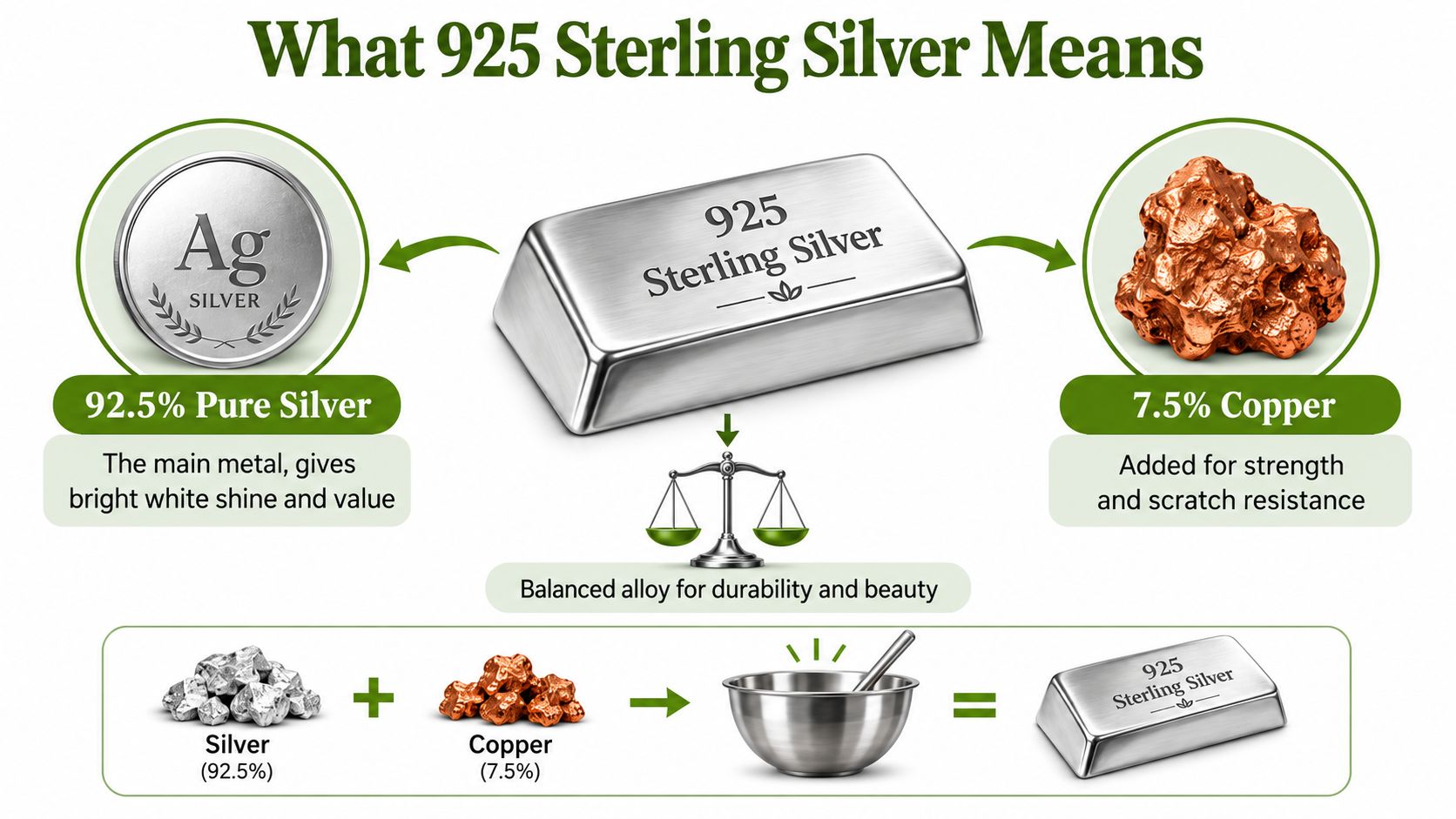
925 sterling silver means a nominal fineness of 925 parts silver per thousand, with the balance made up of other metals. Copper is common, but buyers should not assume the remaining alloy composition without a supplier declaration. The original references provide background (Sterling silver definition, sterling silver code); for U.S. marketing claims, 16 CFR §23.5 is the more authoritative starting point. Local hallmarking and labeling rules can differ by destination market.
Read the alloy like a recipe
Alloying silver can improve mechanical properties compared with fine silver, but “925” alone does not specify chain geometry, temper, solder quality, or clasp construction. Those details affect how a necklace behaves during try-ons and repeated opening.
Approve the actual sample by measuring chain width, necklace length and extension, pendant and total weight, bail clearance, and clasp operation. If strength is important, agree on a suitable inspection or pull-test method and acceptance criteria for that design; do not infer finished-product performance from fineness alone.
What the hallmark tells you in practice
A 925 stamp identifies a fineness claim; it is not, by itself, an independent assay report or proof that every component has the same composition. Findings, solder, stones, and plated areas may require separate clarification. Ask where the mark appears and what material evidence accompanies the lot.
For stocked options, the 925 sterling silver necklaces collection shows current styles. Confirm the individual SKU description and quote because a factory's custom-development capability does not make every ready-stock necklace identical in alloy, finish, dimensions, or testing.
Approval wording: record “declared 925 sterling silver” together with the verification document or method, inspected components, sample ID, and tolerance.
Most Popular Collar de Plata para Mujer Styles and Finishes
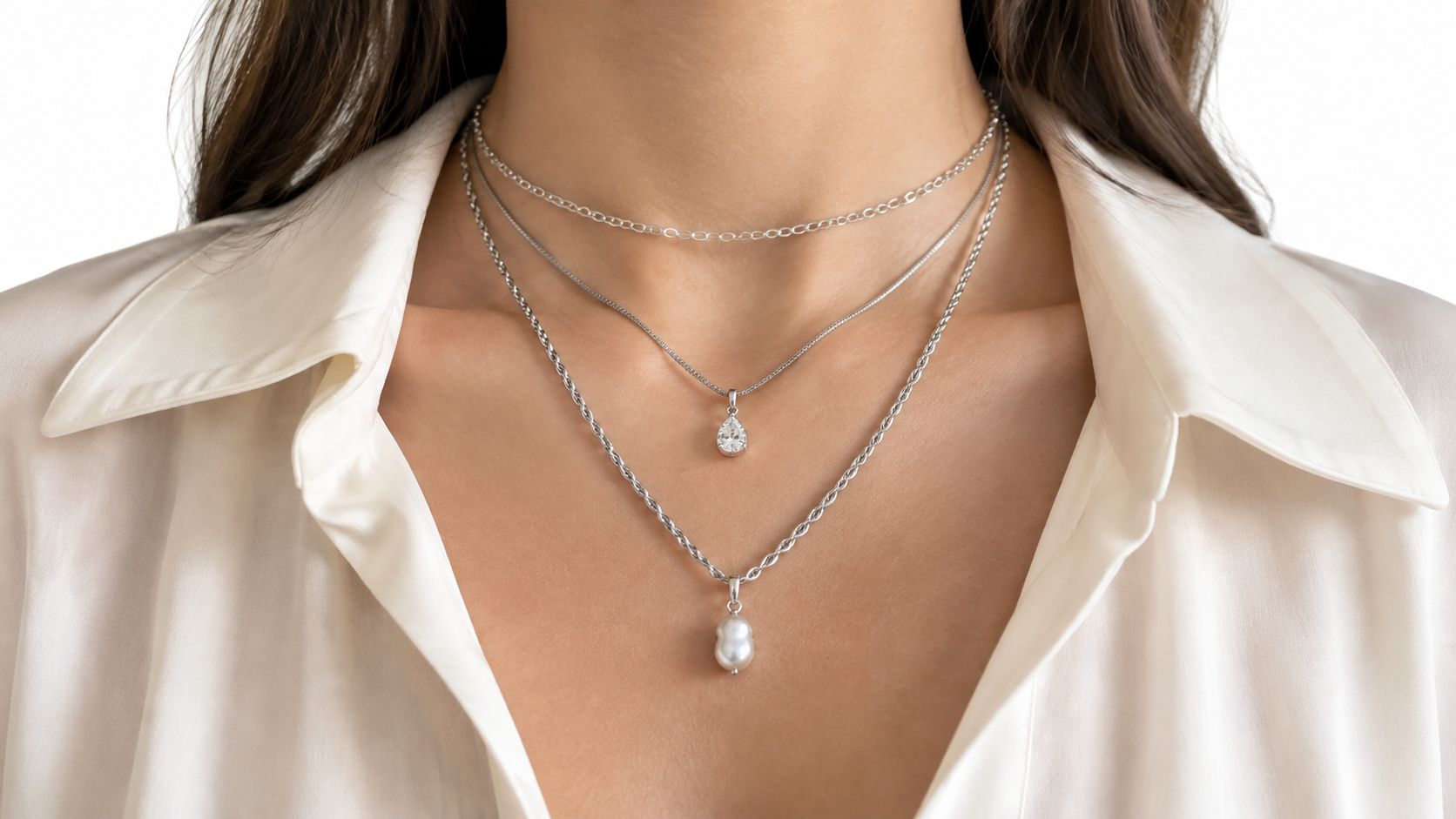
The fastest way to assort a silver necklace range is to stop thinking of it as one product type. A boutique needs several silhouettes that solve different outfits, necklines, and price expectations. A chain-only piece, a pendant necklace, and a layering style each play a different role in resale.
Compare the main silhouettes
A choker or collar length feels close to the throat and works for customers who want a neat, fashion-forward look. A princess length sits near the collarbone, which makes it a safe choice for pendants and daily wear. A matinee length drops lower and brings a more polished, dressier feel. An opera length gives the customer more styling freedom because it can be worn long or doubled.
The style choice changes how the necklace reads at retail. Shorter, cleaner silhouettes often suit minimal wardrobes and tighter necklines. Longer styles do better when the customer wants movement or layering flexibility. A pendant necklace is easier to gift because it gives the buyer a focal point. A chain-only necklace is easier to wear often because it doesn't depend on a specific symbol or charm.
Finishes affect perception and upkeep
High polish, deliberate oxidation, and plating describe surface appearance, not the same material condition. Rhodium-plated sterling has a sterling substrate plus a separate coating; an intentionally oxidized design should not be rejected as accidental tarnish. Put the base metal, coating or finish, color target, and approved sample in separate specification fields.
The cleanest buying strategy is to avoid duplicating inventory. Stock one or two easy daily-wear chains, one or two pendant styles, and one longer piece for layering or gifting. That mix serves different customers without crowding your display with near-identical silver necklaces.
A practical example is HonHo Jewelry Wholesale's Gold Plated and Silver-Finish Stainless Steel Puffy Heart Charm Necklace, which uses three puffy hearts, three polished round beads, a 55 cm plus 5 cm extension length, and a two-tone stainless steel construction. It belongs in the conversation because it shows how a mixed-finish necklace can create a more dimensional retail look without stones, which is useful when buyers are comparing silver-color profiles with different maintenance demands.
Why Silver Tarnishes and How Surface Science Affects Retail Appearance
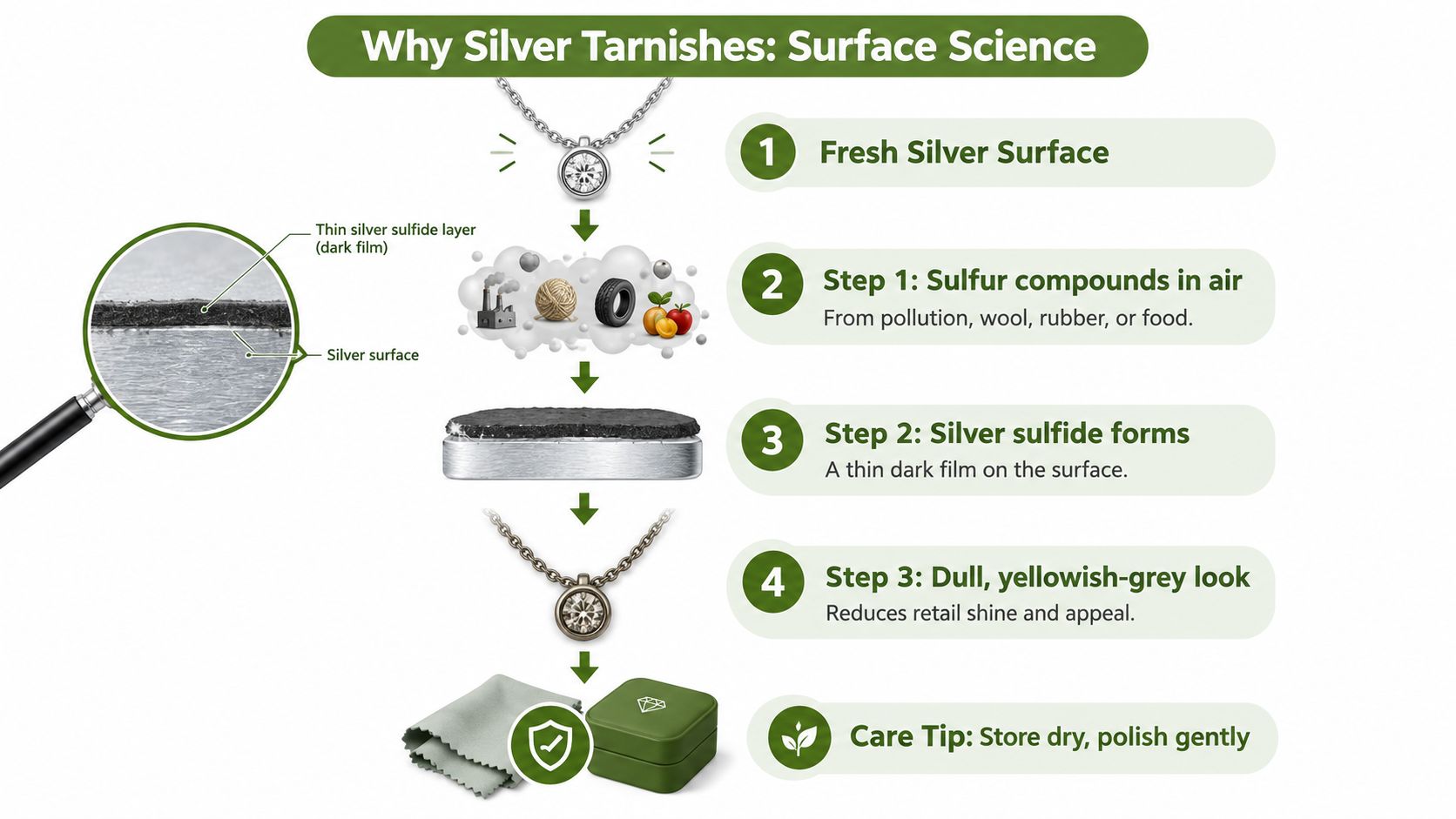
Silver tarnish is a surface change: silver reacts with sulfur-containing compounds and can form a dark silver-sulfide layer. The Smithsonian gives a concise example of silver reacting with sulfur and moisture in air (Smithsonian conservation note). Tarnish changes appearance, but it is not the same as proving that a chain or clasp has structurally failed.
What shoppers see and what the metal is doing
Tarnish is a surface film, not a sign that the necklace is ruined. The top layer changes first, while the metal underneath stays intact. That is why a buyer may see a dull spot and assume the silver itself has failed, even though the issue is usually removable with cleaning or polishing.
For a boutique, this affects how quickly a piece feels sale-ready. A necklace with more exposed surface area shows dullness sooner than a small component style, especially if it is handled often, stored in humidity, or worn near cosmetics and skin oils. The science matters because the display decision matters. A chain that looks slightly muted in back stock may still sell well if it is cleaned and presented well.
Packaging and handling are part of the product
Post-production handling changes the retail result. Low-sulfur packaging, sealed storage, and clear care inserts help preserve the look of sterling silver before it reaches the customer. A daily-wear silver necklace should be treated as a product that needs presentation control, not just inventory control. If a piece arrives bright and then sits in an open tray near moisture, the surface can change before the customer ever touches it.
If you need a broader reference for finish terms, HonHo Jewelry Wholesale's plating finish guide helps buyers separate base metal, plating, and silver-color finishes when they are choosing what belongs in a sterling-focused assortment.
The buying lesson is straightforward. 925 sterling silver carries strong recognition and premium positioning, but it also asks for more disciplined storage and care than some alternative materials.
How to Choose Length Sizing and Care for Everyday Wear
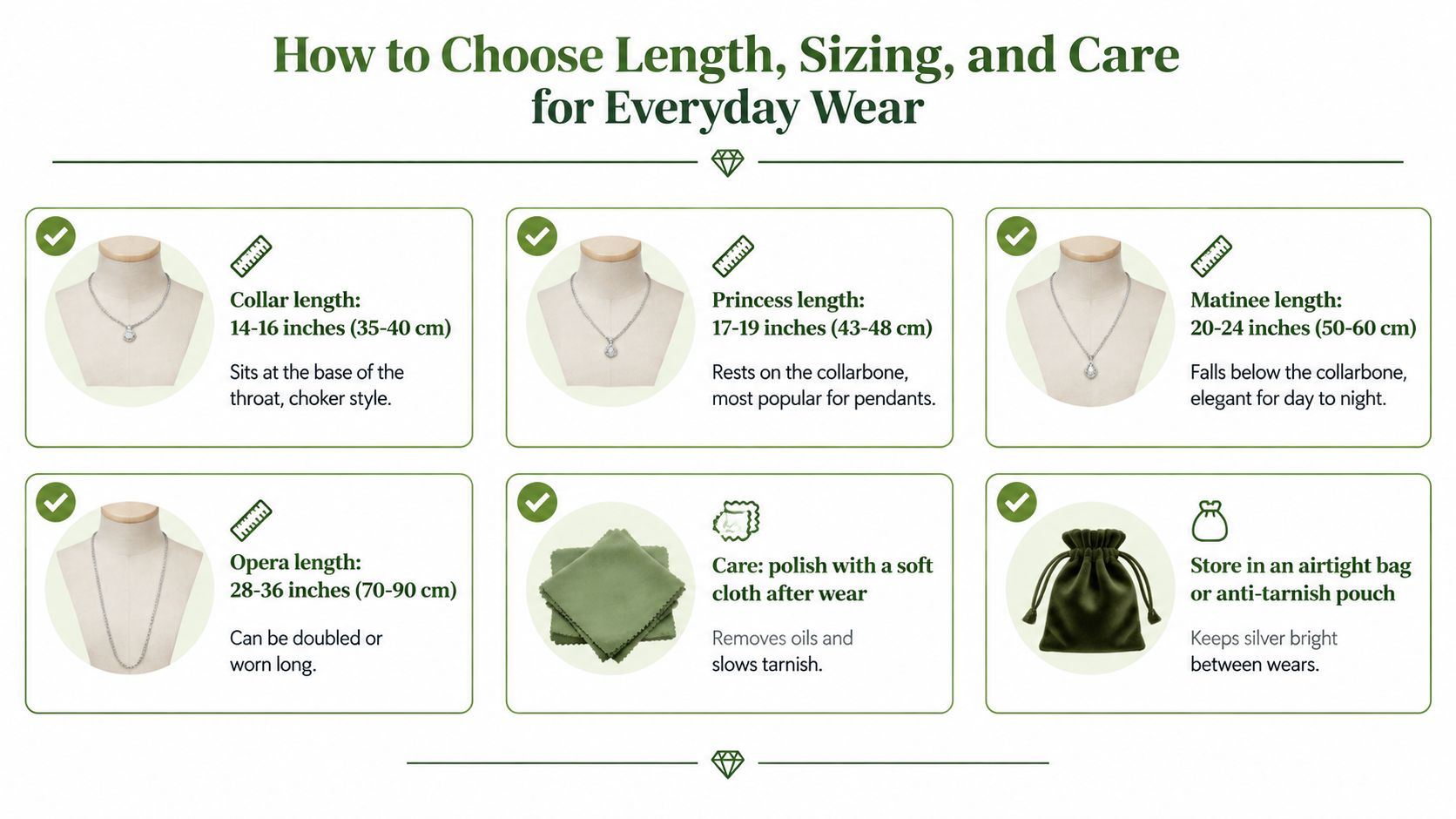
Length changes everything in resale. The same silver necklace can look restrained, romantic, or dramatic depending on where it sits. Buyers also need a simple care script they can give customers without sounding technical.
Match the length to the wear pattern
A collar length feels tight and intentional, so it works best as a fashion piece rather than a default daily necklace. A princess length is usually the easiest fit to sell because it sits near the collarbone and works with pendants. A matinee length gives more vertical presence and can move easily from daytime to evening use. An opera length creates flexibility because it can be worn long or doubled.
Layering should stay controlled. Two necklaces is usually easier to merchandise than a crowded stack, because the customer can still see each piece. A short chain with one longer pendant often gives the cleanest visual result. Pendant weight matters too. A heavier charm pulls a chain down, so the effective fit changes once the necklace is worn.
Teach care in plain language
Give customers a conservative care routine: wipe with a soft cloth after wear, keep the necklace dry, separate it from abrasive pieces, and store it in clean low-sulfur packaging. Avoid prescribing dips or aggressive polishing without checking the finish, stones, adhesives, and any plating. This third-party 925 Silver Jaipur care guidance offers useful retail context, but the care card for a specific SKU should follow its actual construction.
Store silver dry, not on display in the bathroom. That one habit prevents a lot of avoidable dullness.
You can also give customers a simple use-case filter. Occasional-wear pieces can tolerate more relaxed handling, while everyday-wear necklaces need more consistent wiping and better storage. That difference helps reduce returns because the customer knows what kind of care the piece needs before she wears it to the gym, sprays perfume, or leaves it near the shower.
For sizing support, HonHo Jewelry Wholesale's jewelry size guide is a practical reference for stores that want to explain fit in a simple, customer-facing way.
Wholesale Buying Guide for Collar de Plata para Mujer Inventory
The purchase decision is not “silver or not.” It is which documented material and finish best fit the intended customer, retail claim, care burden, and price band. Compare like with like, and keep sterling-silver claims separate from silver-color alternatives.
Use a decision matrix, not a gut feeling
| Selection Criteria | 925 Sterling Silver Option | Alternative for Everyday Wear |
|---|---|---|
| Material identity | 92.5% silver, 7.5% alloy with a 925 hallmark | Choose a more maintenance-tolerant material when the customer prioritizes lower upkeep |
| Retail positioning | Strong for premium silver storytelling and gifting | Better when the buyer wants easier care and a lower-maintenance promise |
| Surface behavior | Can tarnish and needs anti-tarnish storage | Better suited to shoppers who want less visible dulling |
| Customer education | Needs clear care instructions and hallmark explanation | Usually simpler to explain at point of sale |
| Assortment role | Core silver category for boutiques and gift edits | Useful for broader everyday-wear inventory |
Stainless steel can serve as a separate silver-color category, but it must not be described as sterling silver. The linked consumer explainer provides background for material comparisons (316L jewelry material reference); buyers should still confirm the declared grade and finish for the specific SKU rather than transfer a general grade claim to every product.
Sample approval checklist for wholesale necklaces
| Approval point | What to record |
|---|---|
| Material claim | Declared alloy or grade, components covered, stamp location, and supporting document or agreed test method. |
| Finish | Polished, oxidized, rhodium-plated, or other coating; color master; areas intentionally left uncoated. |
| Dimensions | Chain length and width, extension length, pendant size, bail clearance, and piece weight with tolerances. |
| Function | Clasp type and operation, link and jump-ring closure, pendant movement, and the agreed functional check. |
| Appearance | Visible scratches, pits, solder marks, stone alignment, polish consistency, and approved sample photos. |
| Pack-out | Individual protection, anti-tarnish materials if specified, care card, labeling, and carton separation. |
Price and inventory logic belong together
Pricing multipliers are planning conventions, not universal rules. Use the wholesale jewelry pricing guide as one reference, then model the actual landed cost: product, testing or documentation, packaging, freight, duties, payment fees, expected markdowns, returns, and the retailer's target gross margin. A care-sensitive product may also need staff time and replacement-policy allowance.
The Silver Institute survey is useful as a U.S. retailer signal, but it should not set your price architecture by itself. Build opening, core, and premium bands from your own customer mix and test reorder behavior before widening the assortment.
A practical buying rule is to keep the premium silver story, but not tie every necklace to the same care burden. Use sterling where hallmark recognition, gifting, and material value support the price. Use lower-maintenance alternatives where the customer is buying for constant wear.
For ordering details and replenishment planning, HonHo Jewelry Wholesale's wholesale ordering guide is a useful reference before placing a cart.
Final Takeaways for Stocking Collar de Plata para Mujer That Sells
A reliable collar de plata para mujer buy starts with a written specification, not a style name. Confirm the metal claim and finish, approve dimensions and function on the sample, and give customers care guidance that matches the actual construction.
For a first order, use a focused mix of an easy chain, a pendant style, and a longer or adjustable option only when each has a distinct role. Reorder from sell-through and return reasons, not broad market forecasts. If you request custom development, confirm MOQ, sample timing, bulk timing, material, finish, tests, and packaging on the current quotation; those terms do not automatically apply to ready-stock SKUs.
RFQ checklist: target market, style references, material declaration, finish, dimensions and tolerances, quantity by style and color, packaging, documentation, sample approval points, and delivery destination.
HonHo Wholesale Jewelry supplies ready-stock necklaces, 925 sterling silver pieces, and mixed-material wholesale jewelry that fit boutique and online resale planning. Browse HonHo Wholesale Jewelry to compare materials, finishes, and styles for your store, then choose the silver necklace assortment that matches your price point and customer needs.


