

Italian charm bracelets are flat modular-link systems, not conventional chain bracelets with dangling charms. For a wholesale buyer, the first decision is therefore compatibility: the base, decorative links and fillers must share the same physical interface. Country of origin, alloy, finish and compliance evidence are separate decisions and should be documented separately.
Do not approve a range from the word “Italian” or a nominal link width alone. Build the purchase order around an approved assembled sample, component-level material declarations, market-specific test evidence, accurate origin wording and a landed-cost model. Italy remains an important jewelry-manufacturing base, but industry-level figures such as Italy's jewelry industry in numbers do not establish where a particular bracelet was made.
Table of Contents
- What Italian Charm Bracelets Actually Are
- How the Modular Link System Works
- Comparing Materials for Wholesale Buyers
- Compliance and Quality Checks Before You Order
- Italian Made Versus Italian Style
- Wholesale Pricing and Retail Markup Planning
- Private Label and Custom Manufacturing Options
- Sourcing Checklist and Next Steps for Resellers
What Italian Charm Bracelets Actually Are
An Italian charm bracelet is assembled from flat, spring-linked modules that form the bracelet itself. This is different from a chain bracelet that carries separate dangling charms. Decorative modules may be engraved, printed, enamelled or set with another motif, but their attachment geometry matters more to compatibility than the decoration.
| Buyer check | What to record | Why it matters |
|---|---|---|
| Link interface | Width, height, thickness, spring position and opening method | Nominal width alone does not prove two systems will connect or articulate correctly. |
| Finished bracelet | Assembled length, link count and adjustment method | Link count varies with wrist size and the supplier's construction. |
| Decoration | Motif method, edge clearance and finished height | Raised or misaligned decoration can catch, rub or create an uneven surface. |
| Material scope | Base, decorative plate, spring and any coating | One material statement may not cover every component. |
A representative wholesale format uses links around 9 mm wide, but treat that as a starting specification rather than a universal standard. The supplier's Representative modular stainless-steel bracelet listing should be checked against your actual base and sample before you mix links from another source.
The format supports repeat purchasing because a customer can add or rearrange compatible links instead of replacing the entire bracelet. Commercially, that only works when the retailer can replenish the same interface and explain which links fit which bases.
Treat “Italian” as a format first
On many wholesale price lists, “Italian” identifies the modular-link style, not verified Italian manufacture. A bracelet can follow the familiar format while being produced or assembled elsewhere. Do not turn a design name into a country-of-origin claim.
Practical rule: Ask the supplier to state whether “Italian” refers to the style, the design source, component manufacture, final assembly or documented country of origin.
For ready-to-buy assortments, compare bases and charm options in the charm bracelet collection. For each SKU, request the material by component, manufacturing country, finish, dimensions and origin wording in writing.
How the Modular Link System Works
Each module connects to the next through a spring-loaded joining structure. When fitted correctly, the links open for assembly, return to position and flex as a continuous bracelet. A representative format may use links around 9 mm, an assembled length near 7 inches and roughly 20 links, but those figures describe one configuration rather than a universal fit rule. (Representative modular stainless-steel bracelet listing)
Ask the supplier for a dimensioned drawing and an assembled sample. A measurement taken across the decorative face does not describe the hook, spring travel, back profile or tolerance that determines whether another link will fit.
Build the assortment around compatibility
Approve one base-plus-link system before expanding the motif count. Consumer discussions repeatedly focus on whether third-party links fit and whether stated materials match the item; those concerns are useful prompts for sampling, not proof that every brand is compatible.
| Sample check | Accept when | Stop the order when |
|---|---|---|
| Mixed-link fit | Every selected link installs without forcing or tool damage | A link needs bending, sits proud or will not close fully |
| Articulation | The assembled strip bends smoothly with no binding | Links lock, gap unevenly or pinch at the joint |
| Spring return | Opened links return consistently after repeated handling | A spring remains open, feels weak or scrapes adjacent links |
| Surface alignment | Decorative faces form an even line | Motifs tilt, expose sharp edges or create large height steps |
| Size planning | Filler links and adjustment instructions cover the intended wrist range | The assortment has charms but no reliable way to complete the bracelet |
Separate inventory into base bracelets, decorative links, plain fillers and any replacement components. Record the approved base ID against every compatible charm SKU. Photograph representative links installed on the approved base; loose-link photos cannot show scale or fit.
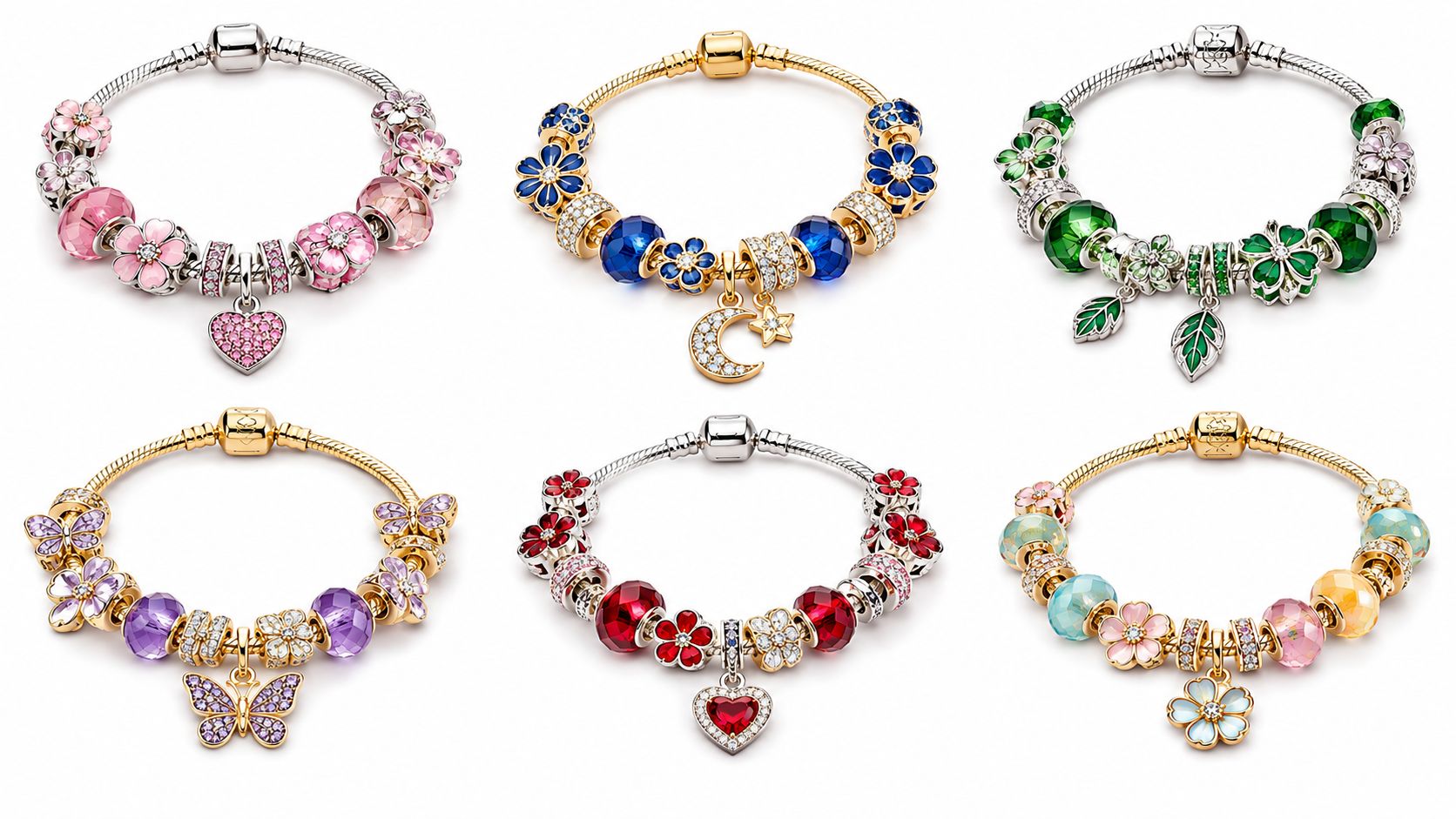
A related construction is shown in this curved link stainless-steel necklace and bracelet with charm options. It is useful for comparing coordinated bases and decorative elements, but confirm its interface separately rather than assuming compatibility with flat Italian-style links.
Comparing Materials for Wholesale Buyers
“Italian” does not identify the metal. Ask for the composition of the link body, decorative face, spring or connector, solder, coating and any adhesive. A familiar alloy name in a listing is not evidence for every component of the finished bracelet.
| Material route | Useful when | Sample and document focus |
|---|---|---|
| Stainless steel | You want an accessible everyday line and a low-profile modular construction | Exact grade by component, edge finishing, spring action, coating system and finished-product test scope |
| Brass | You need detailed forming or fashion-led plated finishes | Base-metal declaration, plating build, tarnish behavior, color consistency and skin-contact evidence |
| 925 sterling silver | The material itself supports a premium or gift proposition | Fineness evidence, finished weight, hallmark obligations where applicable, care instructions and component exceptions |
Do not select one route from a generic price table. The linked Material cost comparison can help identify cost inputs, but it is not a quotation for your bracelet and does not establish its composition. Weight, link design, finish, packaging, testing and order quantity all change the offer.
For plated styles, specify the base metal, surface preparation, coating route, color target and approved production sample. A finish name does not describe the whole layer system. The guide to gold PVD coating explains how to turn a finish label into a more complete RFQ. Factory capability does not mean every ready-stock SKU uses the same metal or coating specification.
Compliance and Quality Checks Before You Order
Assess the finished bracelet for the market and age group in which it will be sold. Alloy names, raw-material certificates and unrelated factory reports do not replace product-specific evidence. The test sample, SKU, color and coating should be identifiable on the report and should match the approved production version.
For EU bracelets intended for direct and prolonged skin contact, REACH Annex XVII restricts nickel release above 0.5 µg/cm²/week. The separate 0.2 µg/cm²/week limit applies to post assemblies inserted into pierced body parts, not to the bracelet body. Review the existing EU nickel-release requirements and test standards together with the current official REACH restriction text. EN 1811 and, for coated articles, the applicable wear-simulation method can form part of the laboratory route; they do not predict a universal consumer wear life.
Request documents for the exact product
| Sales case | Evidence to request | Important limit |
|---|---|---|
| EU adult bracelet | Finished-product nickel-release report and chemical-compliance documentation appropriate to the materials and finishes | Confirm the tested finish and sample identity; do not reuse a report for a different construction without justification |
| U.S. adult bracelet | Material and claim support required by the sales channel and applicable federal or state rules | CPSIA children's-product certification should not be presented as a blanket adult-jewelry requirement |
| U.S. children's jewelry | Applicable lead and surface-coating tests, third-party testing and Children's Product Certificate | The CPSC states that children's jewelry must meet children's-product requirements; classification depends on intended use and age grading |
| Any market | Approved sample, inspection plan and documented checks for link security, sharp edges, spring action and decoration adhesion | A visual catalog image cannot demonstrate mechanical consistency |
The U.S. CPSC jewelry guidance is a useful starting point when the product is intended for children. For other markets or sales channels, confirm the rules that apply to the exact product and age claim rather than requesting a generic “CPSIA certificate.”
Approve link fit, clasp or closure security, spring return, sharp edges, print or enamel adhesion, finish color and packaging on a physical sample. Request close-up production evidence and define the inspection method, sample size and remedy for nonconforming goods in the purchase order.
Record the approved material, finish, dimensions, packaging, logo placement and visual standard before production. Use this jewelry sample approval checklist to connect the approved sample and reports to the final SKU.
Italian Made Versus Italian Style
Italian style describes the modular-link design. Made in Italy is a country-of-origin claim and needs evidence for the particular product. Do not infer origin from a flag, brand name, distributor address or the design's history.
The linked Italian charm bracelet sourcing guidance is useful for supplier-screening questions, but its market-share estimate is not an official statistic and should not be repeated as proof that a given bracelet was or was not made in Italy. Judge the sample and document the actual manufacturing and assembly locations.
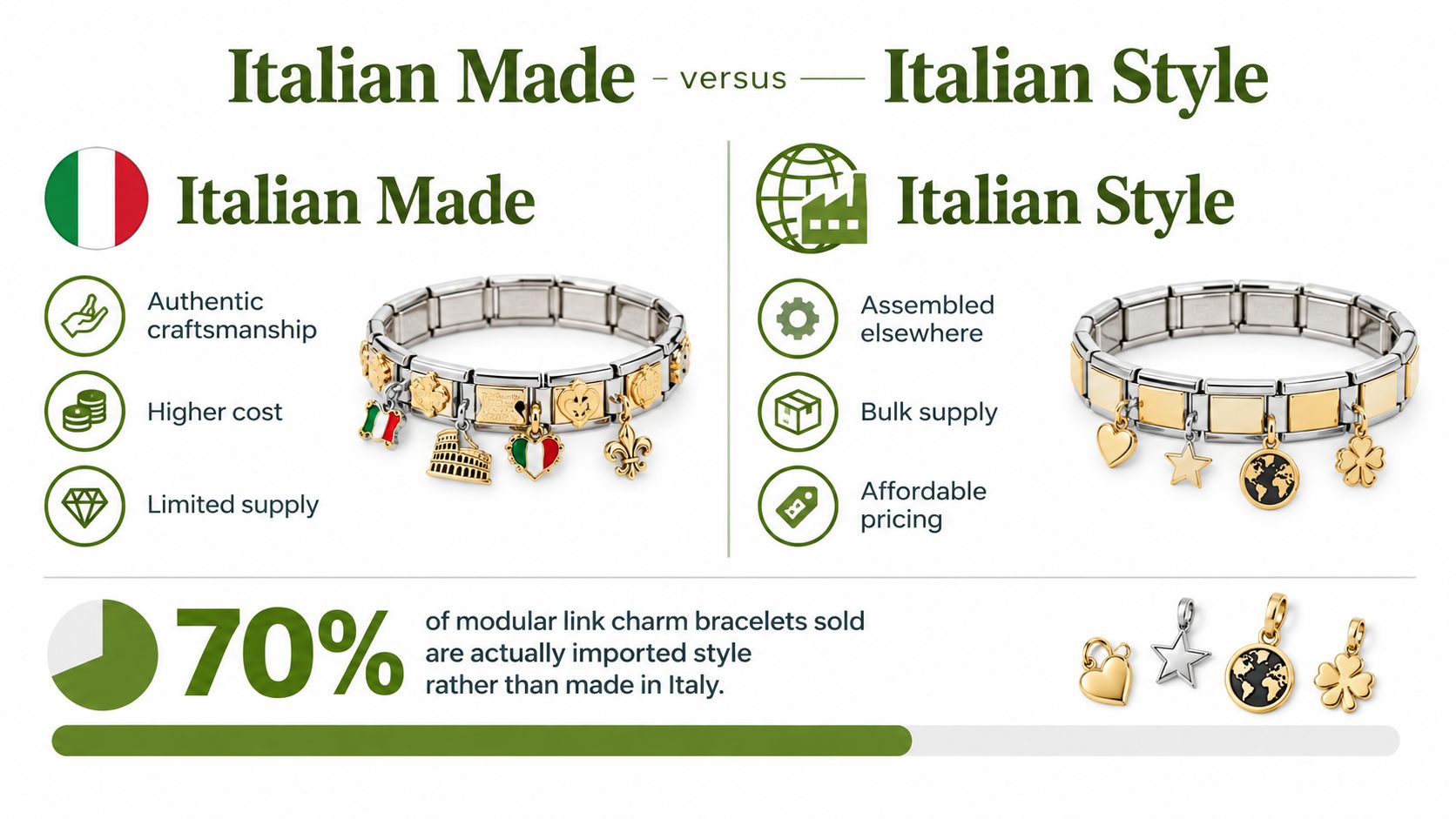
Use transparent product naming
When origin is not documented as Italian, a title such as Italian-style modular stainless-steel charm bracelet separates format from origin. If you intend to use “Made in Italy,” retain supplier evidence, invoices and origin documentation that support the claim and make the product page, packaging and import records consistent.
Ask where the link bodies, decorative faces and springs are manufactured; where final assembly occurs; which entity provides the origin declaration; and whether the packing label and commercial invoice use the same wording. U.S. retailers should also review the FTC's origin-claims guidance and applicable customs marking rules for imported goods.
Origin is one purchasing dimension, not a substitute for quality. An accurately named Italian-style product may be a sound choice when the buyer has verified compatibility, material, finish and compliance. A Made-in-Italy premium is defensible only when the evidence and customer-facing claim agree.
Wholesale Pricing and Retail Markup Planning
A factory unit price is not the selling cost. Build a landed-cost sheet that includes the base bracelet, decorative links, fillers, packaging, freight, duties and taxes where applicable, payment fees, inspection, labeling, defect allowance and fulfillment. Keep one line per component so a growing charm assortment does not hide its true inventory cost.
| Calculation | Use |
|---|---|
| Landed cost per sellable unit = total order cost ÷ expected sellable units | Accounts for defects and components that cannot be sold as planned |
| Gross margin = (selling price − landed cost) ÷ selling price | Tests whether the price covers channel fees, returns, marketing and operating cost |
| Reorder cash need = base reorder + winning links + packaging + freight | Prevents motif sales from outrunning the compatible base stock |
The Material cost comparison can identify variables to quote, but its ranges should not be copied into a budget without the same construction and order terms. Likewise, Retail jewelry markup guidance is a planning reference, not a required multiple for every channel or material.
Run at least three scenarios: expected sell-through, a slower case with markdowns and a defect case with replacements or unsellable units. Then compare the result with your channel fees, customer-acquisition cost and return behavior. The older Wholesale jewelry pricing guidance can prompt commercial questions, but the approved quote and your own costs should control the decision.
Price the bracelet and add-on links as a system. A low-margin base may only work when repeat link purchases are realistic, while an expensive starter set can slow the first conversion. Decide whether links will be sold individually, in themed sets or as a prebuilt bracelet before placing the order.
Private Label and Custom Manufacturing Options
Private label, OEM and ODM describe different scopes; none is automatically safer or cheaper. Match the route to the change you need and the evidence you can approve.
| Route | Typical scope | Buyer control point |
|---|---|---|
| Private label | Existing construction with agreed branding or packaging | Confirm that branding changes do not alter the tested product and approve all claims |
| ODM | Supplier-developed construction adapted through motifs, finishes or packaging | Freeze the selected options and sample identity before the purchase order |
| OEM | Buyer-defined dimensions, materials, artwork and tolerances | Use a complete technical file, validation plan and change-control process |
For HonHo custom-project planning, the current baseline is 50 pieces per style/color. Typical planning windows are 25–30 days for brass or 925 silver samples, 25–35 days for stainless-steel samples and 35–45 days for bulk production after approval. These are project-planning baselines, not promises for every ready-stock SKU or a substitute for the written quote.
Before accepting a custom quote, document tooling, artwork, finish, logo method, packaging, special colors, sample revisions, test responsibility, origin wording, defect remedy and any costs that change with quantity. Approve the assembled compatibility sample, not only a loose charm or rendering.
For a first run, limit finishes and link interfaces, approve one physical sample and keep the claims precise. The private-label jewelry program can help frame the brief. Factory capability does not mean every catalog item already has the same specification, testing or lead time.
Sourcing Checklist and Next Steps for Resellers
Treat the quotation as incomplete until it identifies the interface, materials, origin, finish, evidence, commercial terms and remedy. Use this approval sequence:
- Define the system: Record the base ID, link geometry, assembled length, adjustment method and every compatible charm SKU.
- Approve the sample: Install mixed representative links and check fit, articulation, spring return, edges, decoration and finished appearance.
- Match evidence: Tie material declarations and test reports to the exact sample, color, coating and intended market.
- Lock the claims: Separate Italian-style design from documented Italian origin, and make the product page, packaging and invoice agree.
- Model the economics: Calculate landed cost, sellable-unit allowance, channel fees, returns and reorder cash for bases and links.
- Set the remedy: Define inspection, acceptance, replacement or credit terms before paying the balance.
Buyer's stop rule: Do not place the production order if the supplier cannot connect the assembled sample to the interface specification, material declaration, origin wording and required market evidence.
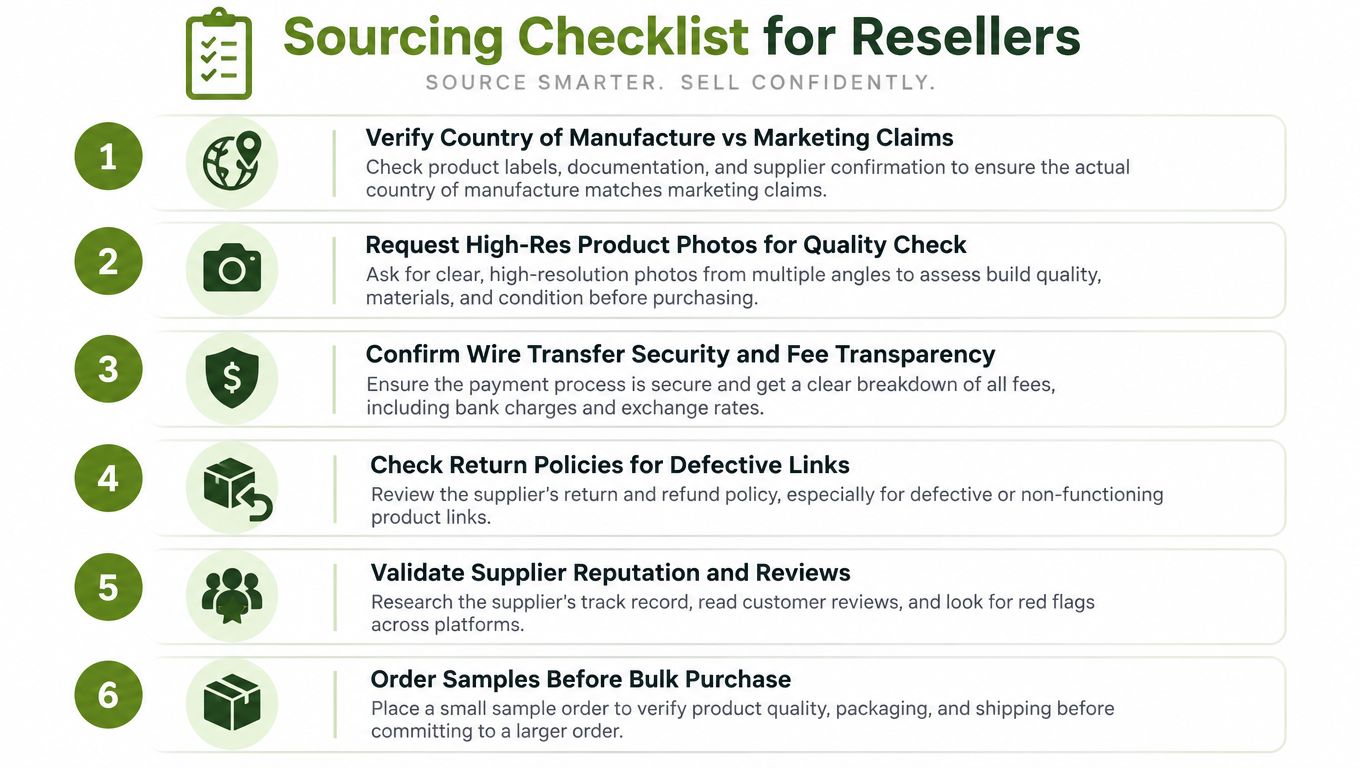
Start with a small, coherent system: one approved base construction, representative plain links and a controlled group of motifs. Track fit complaints and replenishment by interface as well as by design. Expand only after the same components can be reordered to the approved standard.
Browse HonHo Wholesale Jewelry to compare ready-to-buy charm bracelets and related jewelry. For a private-label or custom RFQ, send the intended market, age group, base and link format, component materials, finish, motif count, packaging, quantity by style/color and target date so the supplier can confirm the applicable specification and quote.


